
How Do I Stop My Dog from Pulling on the Leash?
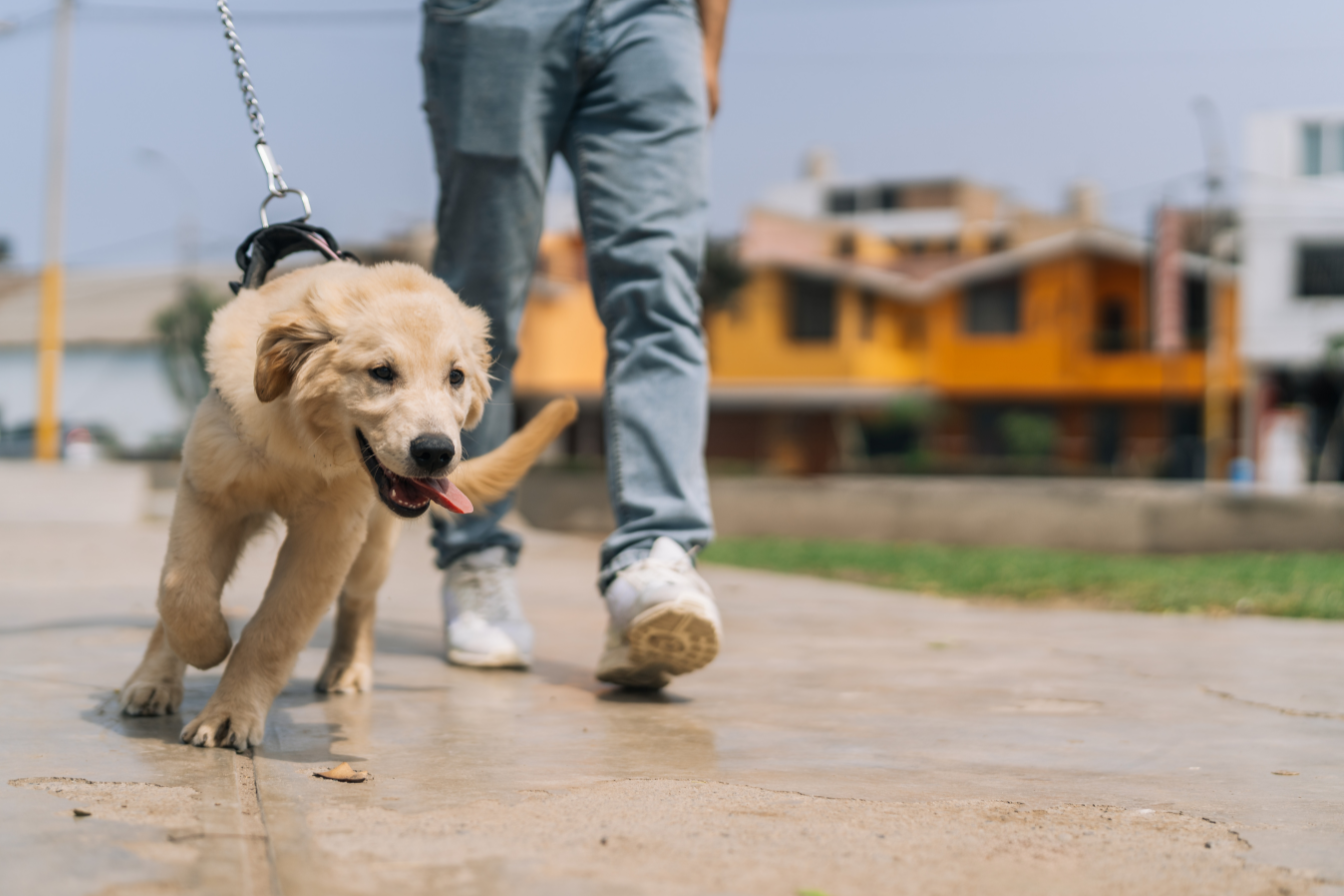
Picture this: you clip on the leash, step outside, and within seconds your dog is out ahead of you, nose down, pulling like they have somewhere to be. You're gripping the leash with both hands, your shoulder is starting to ache, and the walk you hoped would be relaxing feels more like a workout you didn't sign up for. If that sounds familiar, you're not alone.
Leash pulling is one of the most common issues I work on with clients. And almost always, what looks like a battle of wills is actually something much simpler: a dog doing what dogs do, with nobody yet having taught them a different way.
Why Dogs Pull (And It's Not What You Think)
Here's what most people don't realize: dogs experience the world almost entirely through their nose. A walk isn't just physical exercise for them, it's an information download. Every tree, fire hydrant, and patch of grass is a news feed. So when your dog surges ahead, their nose is WORKING. Their brain is lit up. And pulling, as a strategy, works — it gets them to the good stuff faster.
This is pure learning history, not attitude. If pulling has ever gotten your dog to the thing they wanted, the smell, the dog across the street, the interesting person, then pulling has been reinforced, even if you didn't intend it. Dogs learn from outcomes, and "pull = get there faster" is a very effective lesson.
This is true of pretty much every dog, by the way. Given total freedom, they would move at their own pace, zigzag between smells, and linger as long as they wanted on whatever caught their nose. Walking calmly on a leash next to a human is not natural dog behavior, it's a learned skill. That's worth remembering when your dog is pulling. They're not being difficult. They're being a dog.
One more thing worth mentioning: if your dog is walking on a collar and pulling hard, that's worth addressing quickly. Sustained pressure on a dog's throat and trachea is not harmless. A properly fitted front-clip harness is a much safer setup while you work on building leash skills, and it gives you a lot more communication without adding pressure.
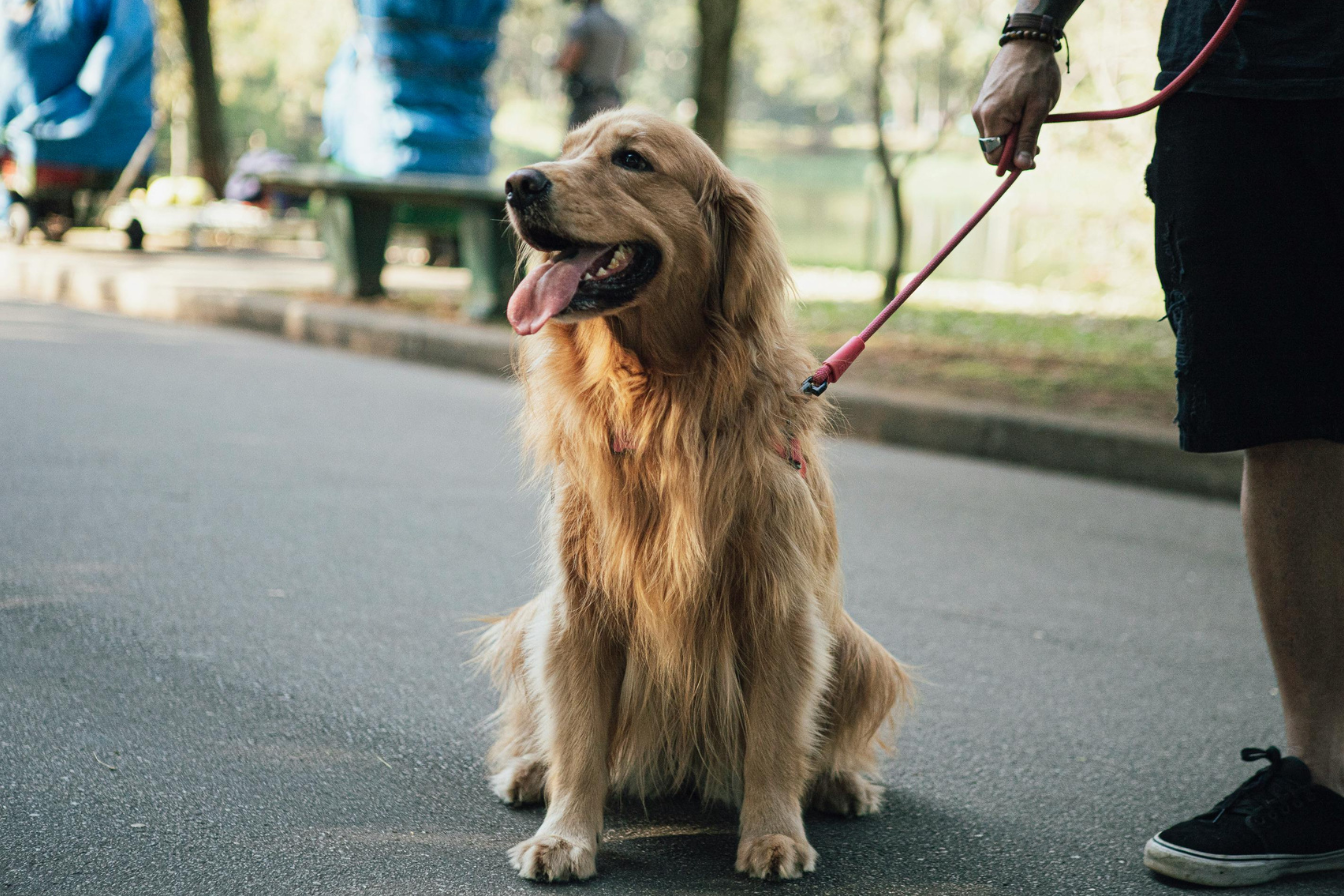
What You May Not Have Known You Were Teaching
Most clients who come to me haven't done anything wrong. They just didn't know what they were accidentally teaching. When a dog pulls toward something interesting and eventually gets there, the lesson is clear: pulling works. The walk itself becomes the reward for pulling.
The good news is that the flip side is equally true. Once your dog starts learning that a loose leash is what moves the walk forward, the whole dynamic shifts.
If you have a puppy and you're catching this early, that's genuinely great news. This is exactly the kind of foundation we build together from day one.
My Approach: Foundations Before Distance
I take what some people call an unconventional approach, but I'd argue it's the most effective one. Before we add distance, we build foundations.
We start with what I call a BUILDING BLOCK, sometimes just two houses' worth of sidewalk. We walk back and forth on that same stretch, working on attention and check-ins, before we ever think about covering more ground. Most people want to walk farther. I want to walk better first.
The reason this works is that a distraction-controlled environment lets your dog actually LEARN. The moment you take a dog who is still figuring out leash skills into a busy block, you've asked them to study for a test and take it at the same time. It doesn't work well for people, and it doesn't work well for dogs either.
A Real Example: The Dog Who Was Always Hunting
One of my clients had a dog who pulled relentlessly, particularly when there were squirrels around. The dog was bright and motivated, but had zero check-in history with their person on walks. Their whole focus was on what was out ahead.
We didn't start with walking. We started with attention.
The first exercise was a name game: say the dog's name, reward eye contact, repeat. Short bursts, low distraction, building a pattern of "when I hear my name, I look at my person and good things happen." Then we added a "find it" game, tossing treats on the ground for the dog to sniff out, which gave the nose a JOB that didn't involve pulling toward squirrels.
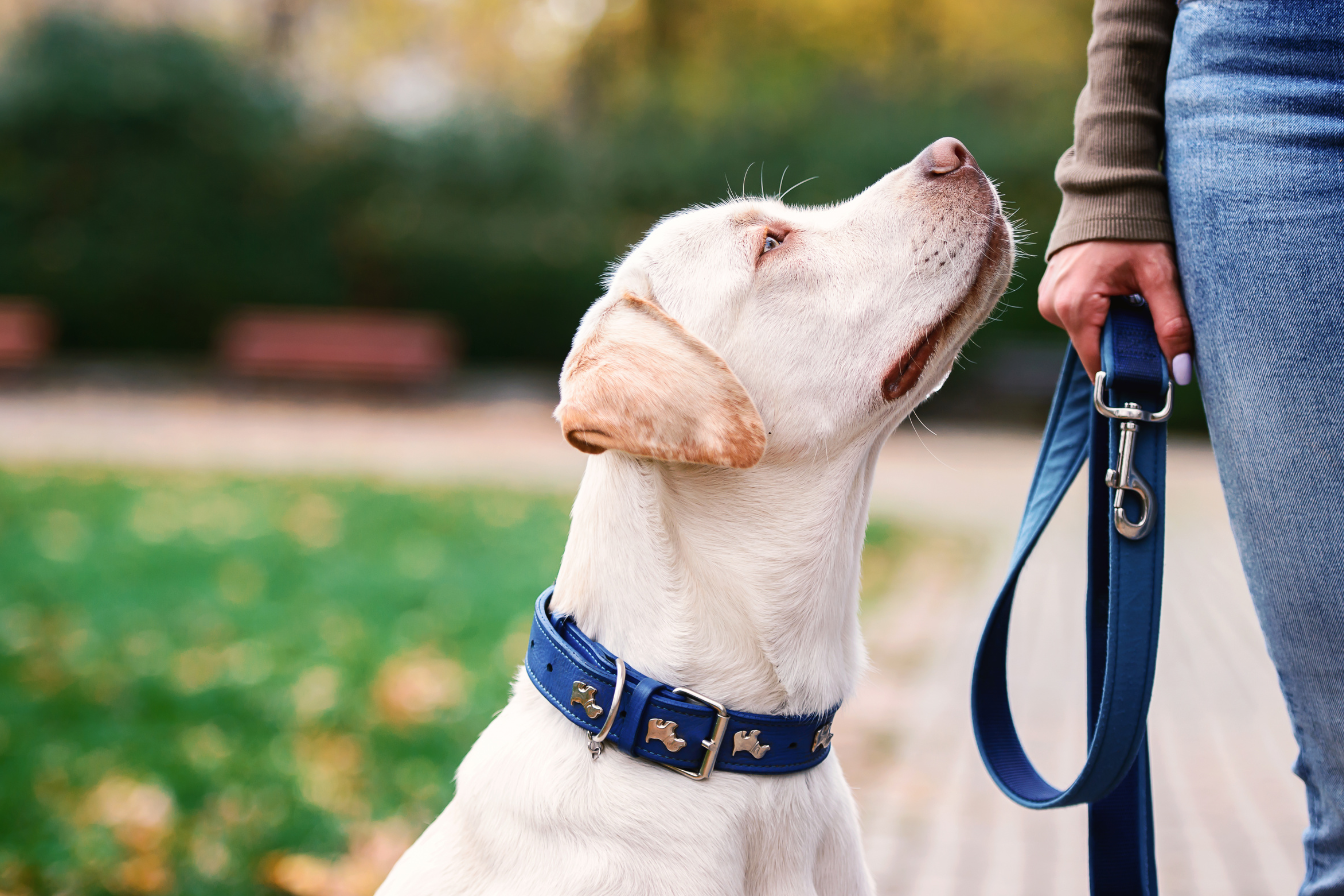
Once the dog was checking in consistently, we added movement. And here's the thing: a dog who is looking at you can't be pulling away from you at the same time. Those two things are physically incompatible. So we built the attention first, and the walking followed naturally.
Where to Start: The Name Game and the Check-In
You can start today with two simple exercises.
The Name Game
Step outside your door, call your dog's name, and reward the moment they look at you. Do it a few times. Keep it short. That's it for day one.
The Passive Check-In
Stand still on your walk, say nothing, and wait for your dog to glance back at you on their own. The moment they do, mark it with a 'yes' and reward. Repeat 3 to 5 times, then move to a new spot and repeat. You're building a habit, and right now that habit needs to pay out consistently so your dog learns that checking in with you is always worth their while.
Once your dog is checking in reliably on walks, the next question most clients ask is about other dogs on the route. Here's my take on whether your dog should meet every dog you pass on walks.
Progress Over Distance
Leash training is not a race, and the short focused sessions are genuinely tiring for your dog. A dog who is actively thinking and making decisions is burning real mental energy, even if you only covered half a block.
Start counting check-ins instead of steps. How many times did your dog look back at you today? That number going up is real progress. And the payoff, once it builds, is exactly what you've been picturing: a dog who walks by your side, who looks up at you on the trail, who you can bring to the Saturday farmers market without white-knuckling the leash.
That walk is completely within reach. You just have to build it from the ground up.
Ready to get there faster with personalized guidance? Book a session at familypupz.com.
