

If you talk to enough dog parents, you’ll start to notice a pattern.
Many of them quietly carry a feeling that they might not be doing enough.
Maybe they should be training more. Maybe their dog should already know certain things. Maybe other dogs are calmer. Maybe other dog parents seem to have things more figured out.
Even people who are deeply committed to their dogs — people who are walking them every day, researching training methods, and trying their best — sometimes feel like they’re falling short.
And there’s a simple reason this feeling shows up so often.
Most dog parents are raising their dogs in isolation.
The Quiet Isolation Of Modern Dog Parenting
In earlier times, raising animals often happened in more communal settings.
People saw how other animals behaved. They watched how other people handled challenges. They had regular reference points for what was normal.
Modern dog parenthood often looks very different. Most dog parents experience their dog primarily through a private lens:
Their own home
Their own walks
Their own daily routines
Occasionally they might see other dogs at the park or on the sidewalk, but those moments are brief and often misleading.
You might see the calm dog passing by on a loose leash — but not the chaos that happened five minutes earlier inside that person’s home.
As a result, many dog parents end up evaluating themselves with almost no real reference point.
When The Lens Gets Too Narrow
When you only see your own dog’s struggles, it’s easy for your perspective to shrink.
A dog that pulls on the leash can feel like a major failure. A dog that jumps on guests can feel like a sign that something is wrong. A dog that gets overly excited around other dogs can feel like proof that you’re behind.
But when professionals who work with dogs every day see these situations, the picture usually looks very different. What feels unique or overwhelming to one dog parent is often extremely common.
In fact, many of the challenges people worry most about are simply part of normal dog behavior.
A Small Moment That Reveals Something Bigger
There’s another moment that comes up during training sessions that quietly reveals how isolated many dog parents are.
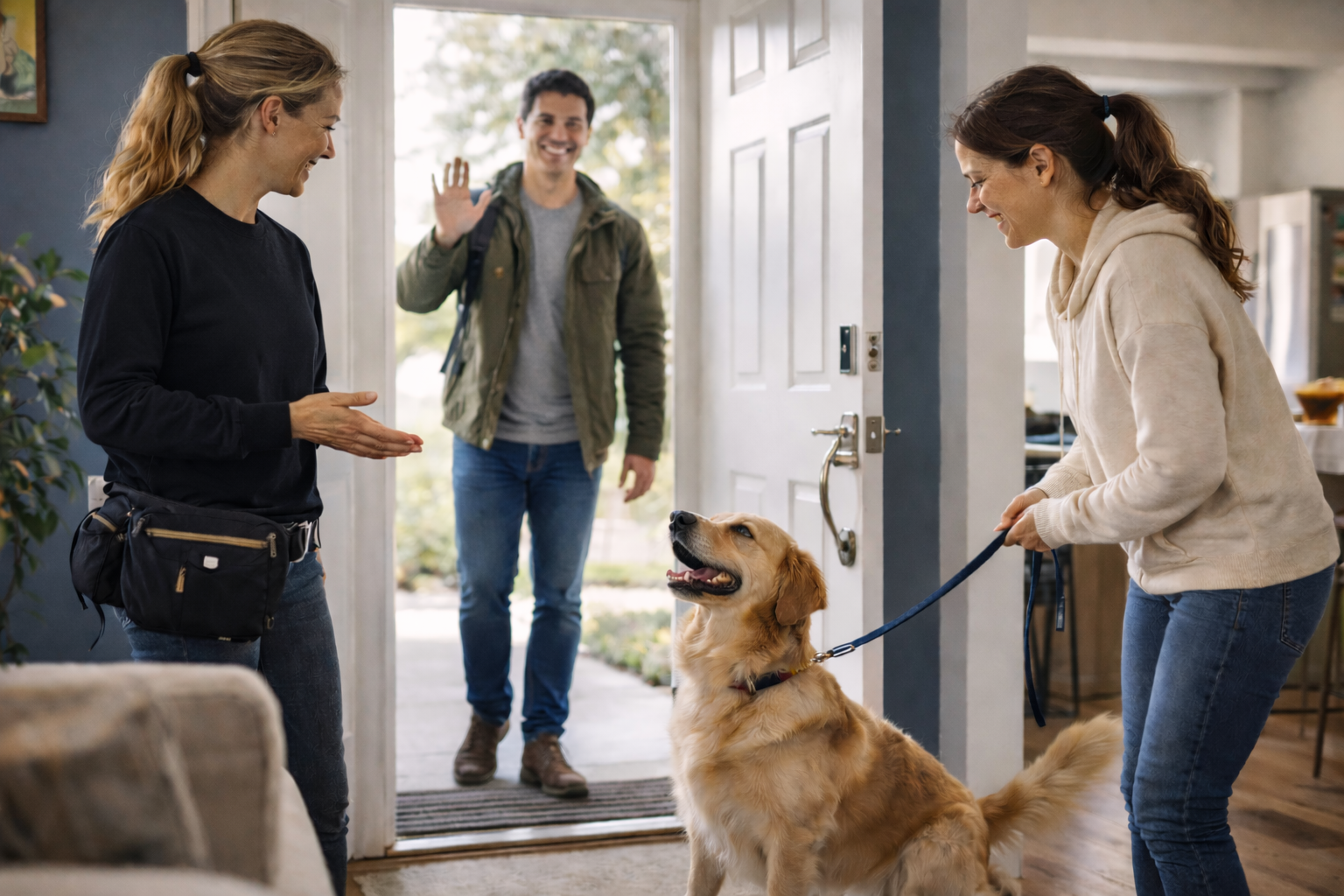
Sometimes a training exercise requires a person who doesn’t live in the household. For example, if a dog jumps on guests, it helps to practice the greeting process with someone who can knock on the door and come inside.
So the trainer will often suggest something simple:
“Maybe you can invite a friend over to help with this exercise.”
And surprisingly often, the response is hesitation. Not because people don’t want help. But because many of them genuinely struggle to think of someone they could ask.
Sometimes schedules don’t line up. Sometimes people also feel uncomfortable asking for help. And sometimes the reality is that their daily life is already full enough that coordinating something like that feels difficult.
And especially in a place like Denver, there’s another factor that shows up often: many people are relatively new to the city.
So, for a lot of people, that often means their closest friends and family still live in other parts of the country.
Over time, this has happened often enough that we’ve had to occasionally bring in our partners to be the “guest” for families practicing greeting exercises.
What started as a practical solution slowly revealed something deeper.
Many dog parents are navigating these challenges almost entirely on their own.
Parenting — Human Or Dog — Can Be Surprisingly Solitary
This kind of quiet isolation isn’t unique to dog parenting.
Human parents often describe something very similar.
They spend most of their time making decisions about their child without much real comparison or feedback.
So it’s natural for them to wonder:
Are we doing this right?
Are other parents dealing with this too?
Are we behind?
Are we doing okay?
Dog parents often carry very similar questions.
But without regular opportunities to see how other people are handling similar challenges, it’s easy for small issues to start feeling bigger than they really are.
Why Hearing It From A Professional Feels Different
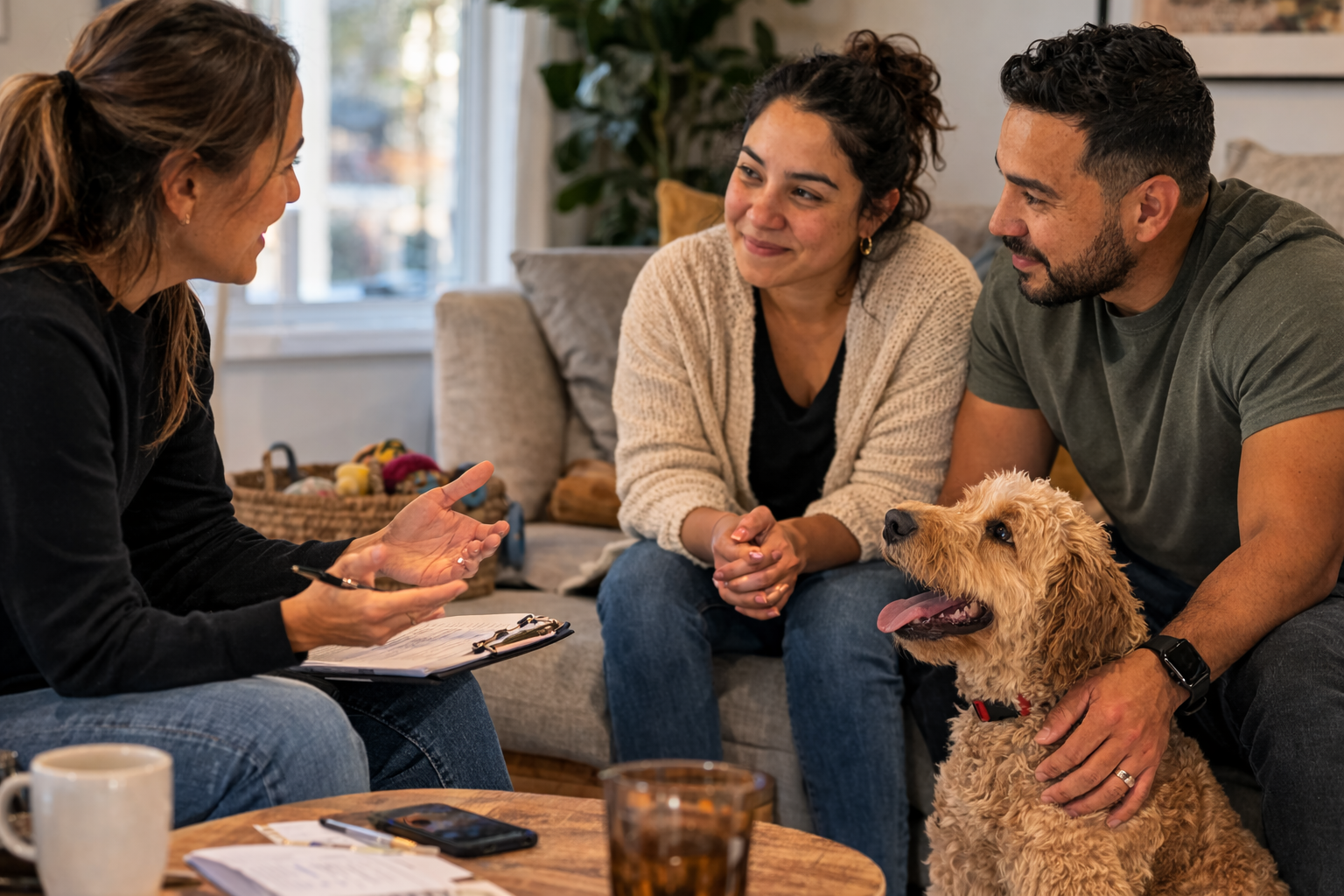
Something interesting often happens during an initial consultation.
A dog parent explains their situation. They describe the behaviors they’ve been worrying about. And then they hear something simple:
“This is actually quite common.”
You might assume hearing that from a friend would have the same effect. But it rarely does.
There’s something about hearing it from someone who has seen hundreds — sometimes thousands — of dogs that changes the weight of the words.
A friend’s reassurance can feel kind. A professional’s reassurance feels like data. It provides context.
Suddenly the question shifts from:
“Am I failing?”
to something much more grounded:
“Oh… this is just something people work through.”
The Relief Of A Wider Perspective
One of the most noticeable moments during consultations is the moment a dog parent visibly relaxes.
Not because the problem disappeared. But because the situation suddenly fits into a larger picture.
They realize that:
Other dogs pull too.
Other dogs get excited.
Other dogs need time to learn.
And perhaps most importantly:
Other dog parents are figuring it out just like they are.
That wider perspective can remove an enormous amount of pressure.
Instead of feeling like something is wrong with their dog — or with them — the situation becomes something much more manageable. It becomes something people work through. And that shift matters.
Because when the shame or quiet worry fades, something else becomes possible: action.
Now there’s something they can do about it. Instead of avoiding the problem or feeling discouraged, they can start working on it — step by step — with a clearer understanding of what’s normal and what progress actually looks like.
A Simple Reminder
If you ever find yourself wondering whether you’re doing enough for your dog, you’re not alone.
In fact, that question often shows up most strongly in the people who care the most.
Sometimes what helps isn’t more techniques, more research, or more pressure to get everything right.
Sometimes what helps most is simply seeing your situation through a wider lens. Because when you do, something becomes clear very quickly:
Most dog parents aren’t failing. They’re learning.
Just like their dogs are.
