
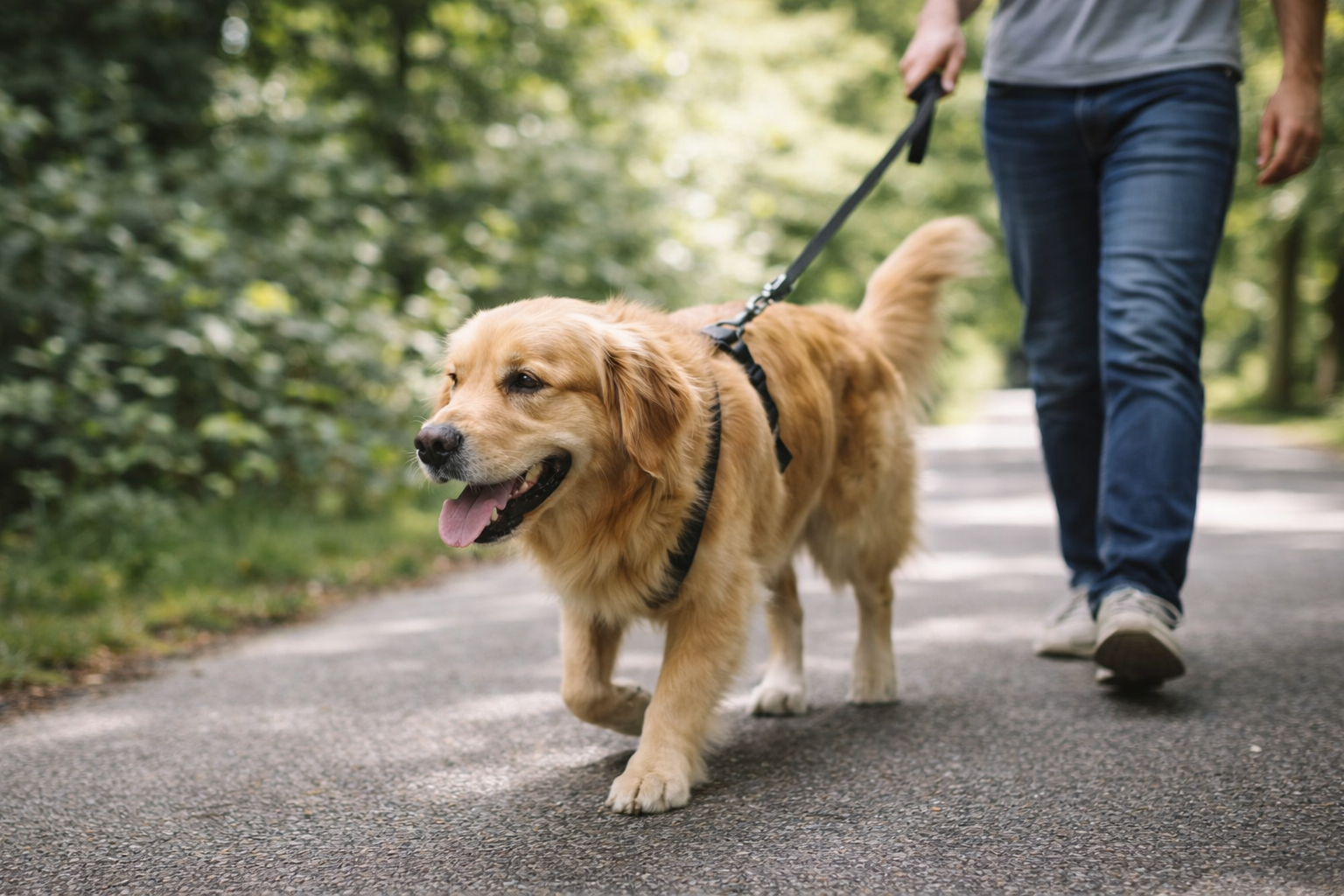
One of the most common questions people ask during walks is:
“Is it bad if my dog walks in front of me?”
Many dog owners have heard that letting a dog walk ahead means the dog is trying to assert dominance or take control of the walk.
Because of that idea, some people try to keep their dog strictly behind them or glued to their side at all times.
But in reality, the position of your dog on the walk usually isn’t about dominance at all.
The Dominance Myth
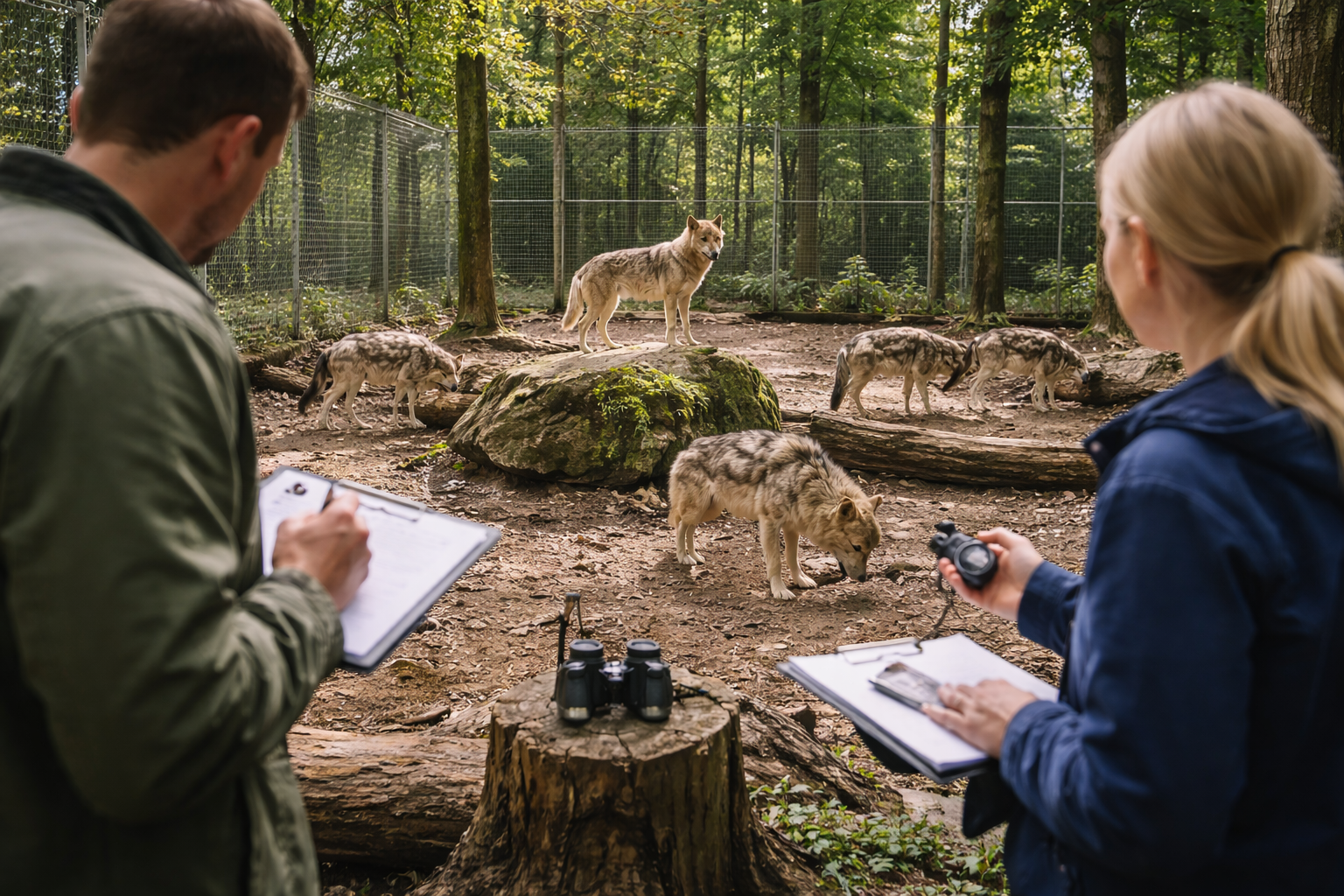
The idea that dogs walking in front are trying to be the “leader of the pack” comes from outdated interpretations of wolf behavior.
Much of this thinking traces back to early wolf studies that observed unrelated wolves living together in captivity. Because these wolves competed over food and space, researchers interpreted the behavior as strict “alpha” dominance hierarchies.
One of the scientists whose early work helped popularize this idea was L. David Mech through his 1970 book The Wolf: Ecology and Behavior of an Endangered Species.
But after decades studying wild wolves, Mech later clarified that these conclusions were misleading. Wild wolf packs are typically family groups, led by the parents rather than competing for dominance.
Dogs add another layer of complexity. After thousands of years of domestication, most everyday dog behaviors — including walking slightly ahead on a leash — are not about trying to control their human.
More often, dogs walk in front for simple reasons:
They’re curious about the environment
They’re excited about the walk
They move faster than we do
They’re following interesting smells
In other words, they’re just being dogs.
What Actually Matters On Walks
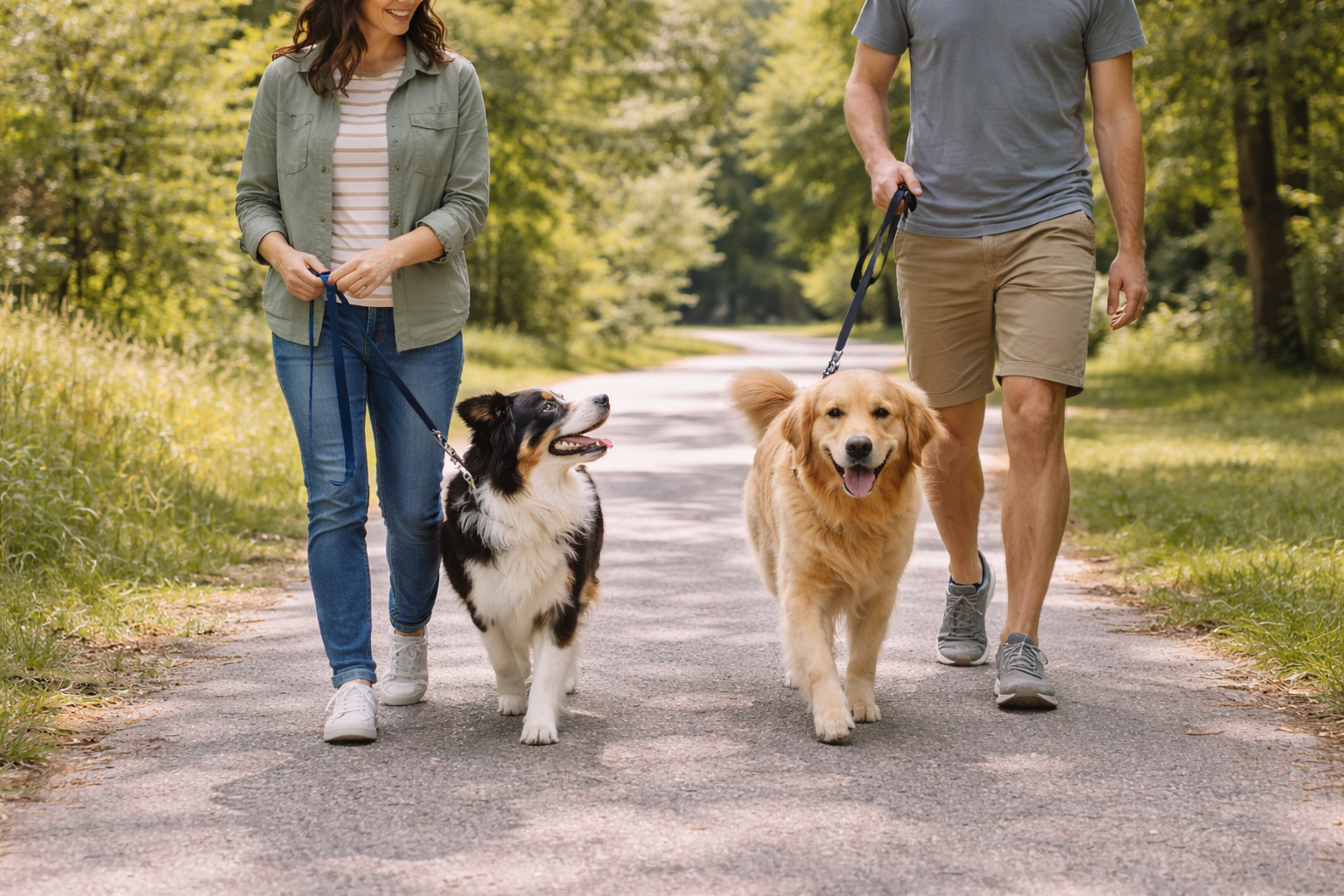
Instead of worrying about whether your dog is in front or beside you, it’s much more useful to focus on how the leash feels.
A pleasant walk usually means:
The leash stays mostly loose
Your dog can move and explore without dragging you
Both of you can change direction comfortably
Your dog can check in with you occasionally
If those things are happening, your dog’s exact position on the walk isn’t very important.
Some dogs naturally walk beside their person. Others like to move a few steps ahead.
Both can be perfectly fine.
When Position Can Be Helpful
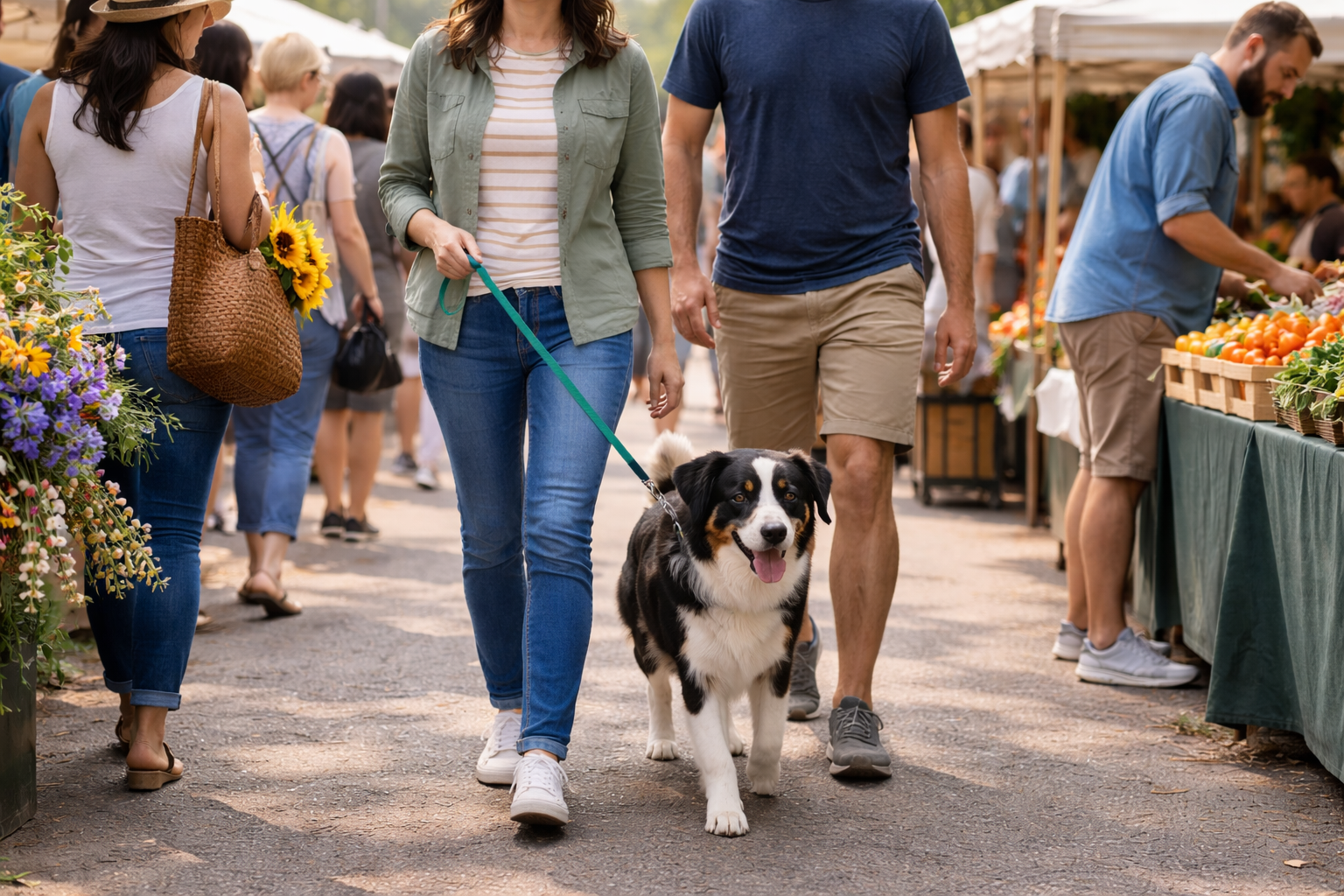
There are situations where having your dog closer to your side can make life easier.
For example:
Passing other dogs on a narrow sidewalk
Walking through crowded areas
Crossing streets
Moving through tight spaces like apartment hallways
In these moments, teaching your dog a cue that brings them closer to you can be very helpful.
But that doesn’t mean they need to maintain that position for the entire walk.
Many dogs benefit from a mix of structure and freedom — moments where they walk close, and moments where they can explore.
A More Useful Goal For Walks
Instead of focusing on whether your dog is in front or beside you, a more helpful goal is teaching your dog how to move with you comfortably on the leash.
That includes things like:
Walking without constant tension on the leash
Responding when you change direction
Staying calm around distractions
Checking in with you during the walk
When those pieces are in place, walks tend to feel relaxed and enjoyable for both the dog and the human.
If you’d like to achieve that with your dog, and don’t yet have the slightest clue how to do it, reach out, and we can show you how to have more fulfilling and enjoyable walks with your dog, without having to worry about whether your authority is being constantly tested :)
