
One of the most common questions new puppy parents ask is:
“When should I start training my puppy?”
Many people assume training begins once the puppy is older — maybe after all vaccinations are complete, or once the puppy has “settled in.”
But in reality, training starts the moment your puppy arrives home.
Not because your puppy needs to learn dozens of cues right away, but because puppies are constantly learning from their environment, whether we are actively teaching them or not.
From the very first day, your puppy is already figuring out how the world works.
Puppies Start Learning Immediately
The moment a puppy enters a new home, learning begins.
They start noticing things like:
Where to go to the bathroom
What behaviors get attention
Whether biting hands is allowed
How humans respond to excitement
What daily routines feel like
Even if you never say the word “training,” your puppy is still building habits.
Every interaction — feeding time, playtime, bedtime, greeting people — becomes part of their education.
This is why many trainers encourage puppy parents to think about training less as formal lessons and more as guiding everyday behavior.
Small moments repeated consistently shape a puppy’s understanding of the world.
Early Training Isn’t About Commands
When people hear the word training, they often picture something very specific.
A puppy sitting on the floor. A person pointing a finger. And a series of commands like:
Sit.
Down.
Stay.
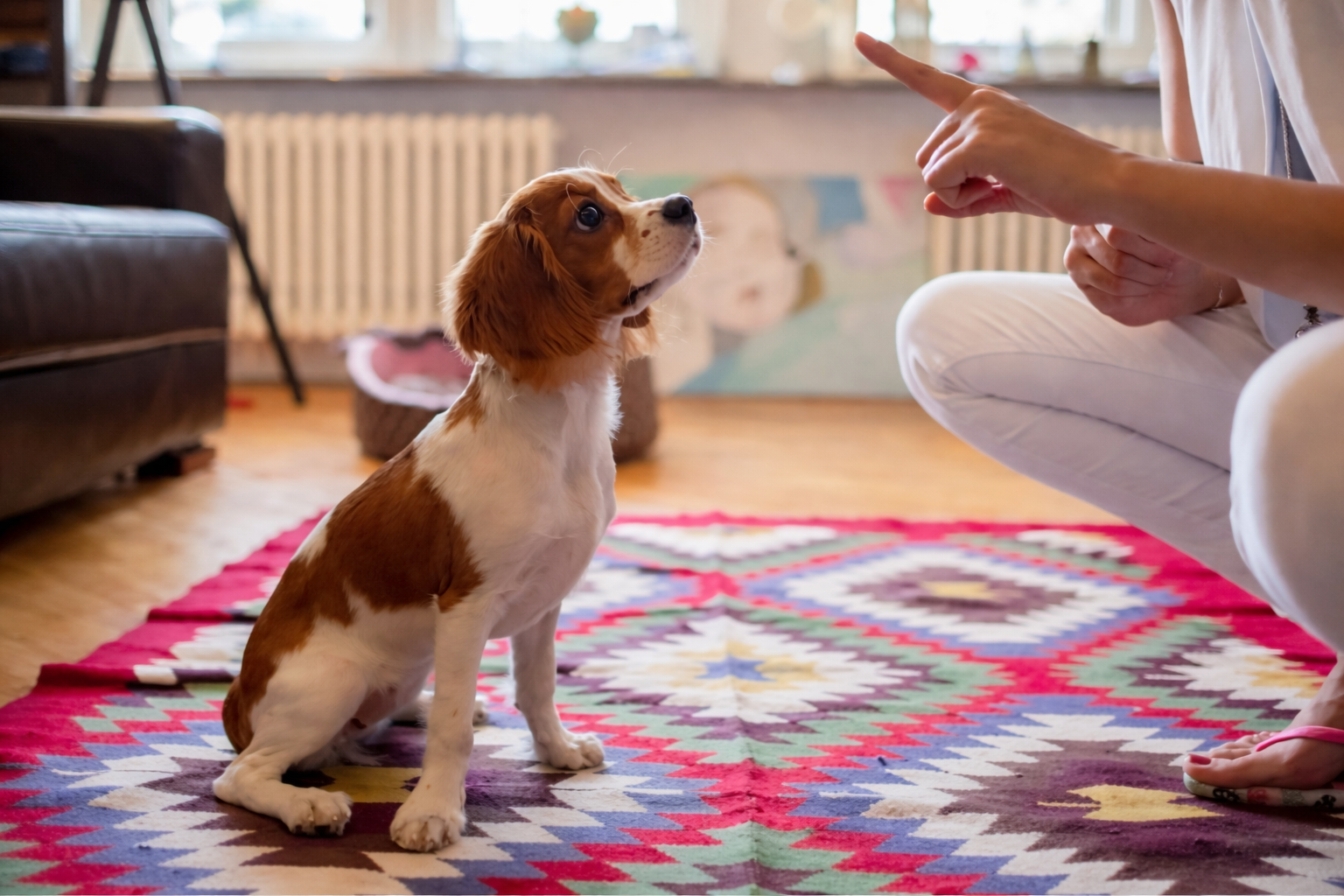
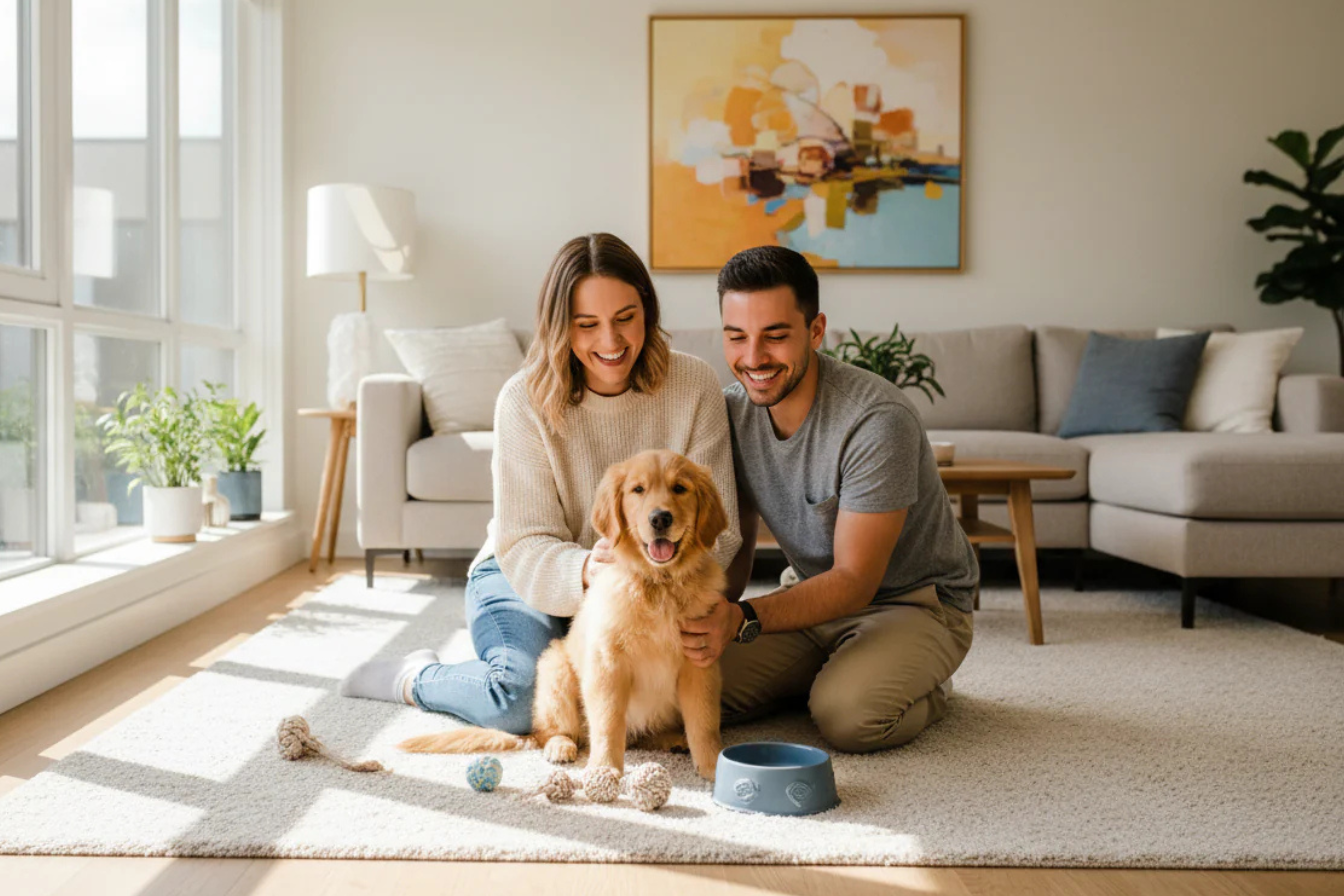
In fact, if you were asked to picture puppy training in your mind, it might look almost exactly like the header photo above.
And while puppies certainly can learn cues like these, the earliest stages of training are usually much simpler — and much more important.
Instead of focusing on obedience cues, early training focuses on helping your puppy learn how to live comfortably in a human environment.
This includes things like:
Learning that human skin is not for biting
Getting comfortable being handled
Following you calmly around the house
Beginning potty routines
Learning that calm behavior earns attention
These foundational lessons matter far more than teaching a long list of cues.
They create the communication and trust that make later training much easier.
What About Training Outside Before Vaccines?
This is where the conversation often becomes a little controversial.
Many puppy owners are told their puppy should not touch the ground outside until vaccinations are complete.
The concern behind this advice is understandable. Puppies are still building immunity, and veterinarians want to reduce the risk of exposure to diseases like parvovirus.
Because of that, some people interpret the guidance as:
“Don’t take your puppy outside AT ALL.”
But avoiding the outside world completely can create another challenge.
You see, puppies go through an important developmental window early in life where new experiences shape how confident they feel later on.
During this time, puppies are naturally curious and open to learning.
If puppies spend their early months almost entirely indoors, they may miss valuable opportunities to gradually learn that the outside world is safe and predictable.
That’s why many trainers and veterinary behavior specialists recommend a balanced approach.
Instead of avoiding the outside world completely, puppies can begin experiencing it in carefully managed ways.
For example:
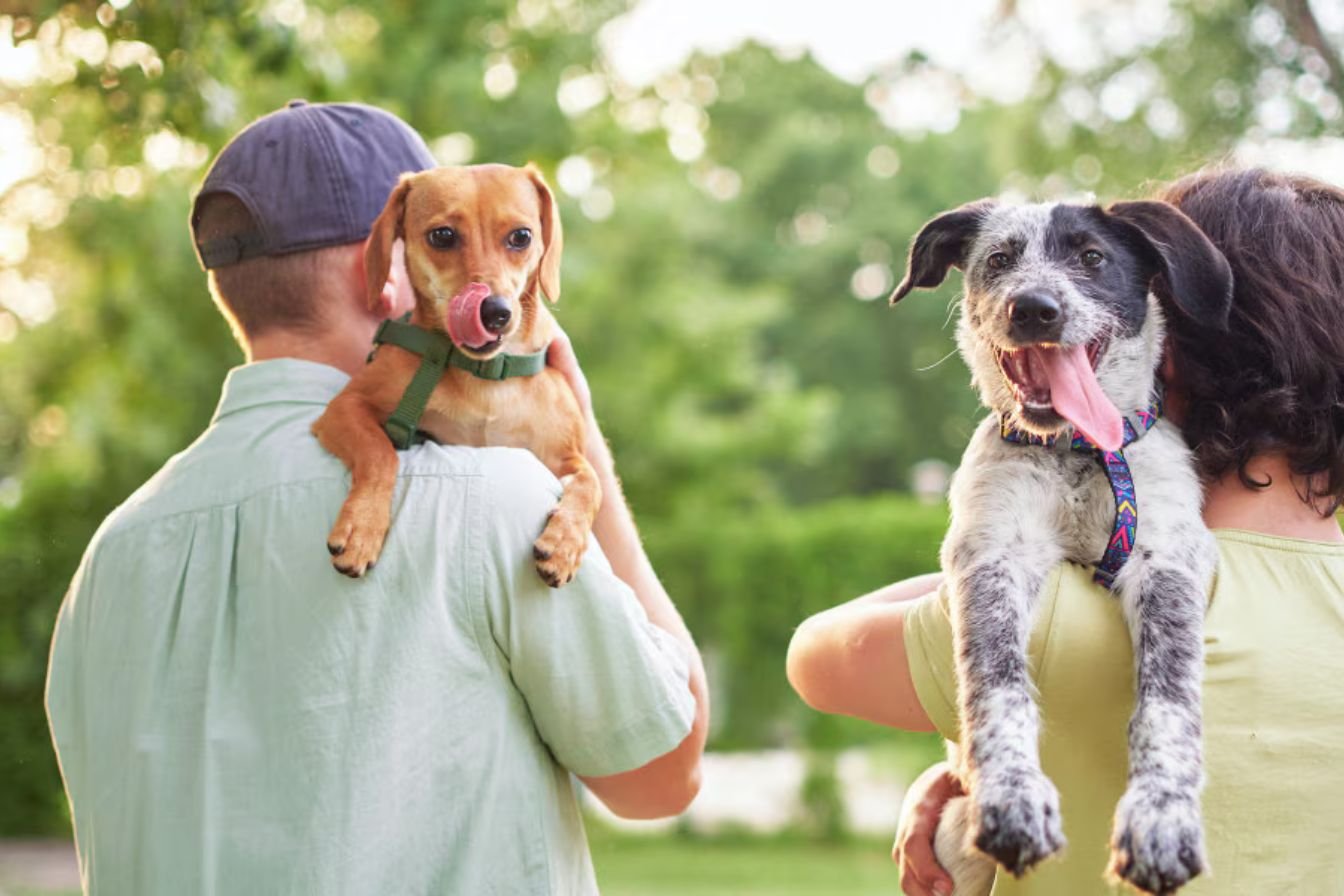
Carrying your puppy through new environments
Allowing them to observe the world from your arms
Visiting quieter outdoor spaces
Practicing very short walks in lower-risk areas
Watching people, bikes, and other dogs from a comfortable distance
These early experiences help puppies become familiar with the world while still being mindful of health risks.
The goal isn’t to rush your puppy into every situation.
The goal is simply to begin introducing life outside the home gradually.
Keep Early Training Short and Simple
Young puppies have very short attention spans.
Training sessions don’t need to be long to be effective.
In fact, many of the best training moments last only 30 seconds to a few minutes.
Instead of setting aside long formal sessions, try weaving training into everyday routines.
For example:
Reward your puppy for calmly sitting near you
Practice saying your puppy’s name and rewarding attention
Reinforce successful potty trips outside
Encourage gentle play instead of biting
These small interactions, repeated throughout the day, build powerful learning patterns.
The Real Goal of Early Training
Early puppy training isn’t about creating a perfectly behaved dog overnight.
In many ways, training is simply the process of showing them how life with you works — what brings calm attention, what earns rewards, and how to move comfortably through daily situations.
And naturally, your puppy will look to you for that guidance.
When training begins early, puppies tend to develop:
Strong communication with their humans
Confidence in new environments
Better impulse control
A sense of predictability in daily life
These qualities form the foundation for everything that comes later.
And while this might sound like another responsibility to add to your list, it’s often more helpful to think of it as something else entirely.
You’re not just teaching behaviors.
You’re building the relationship from the ground up.
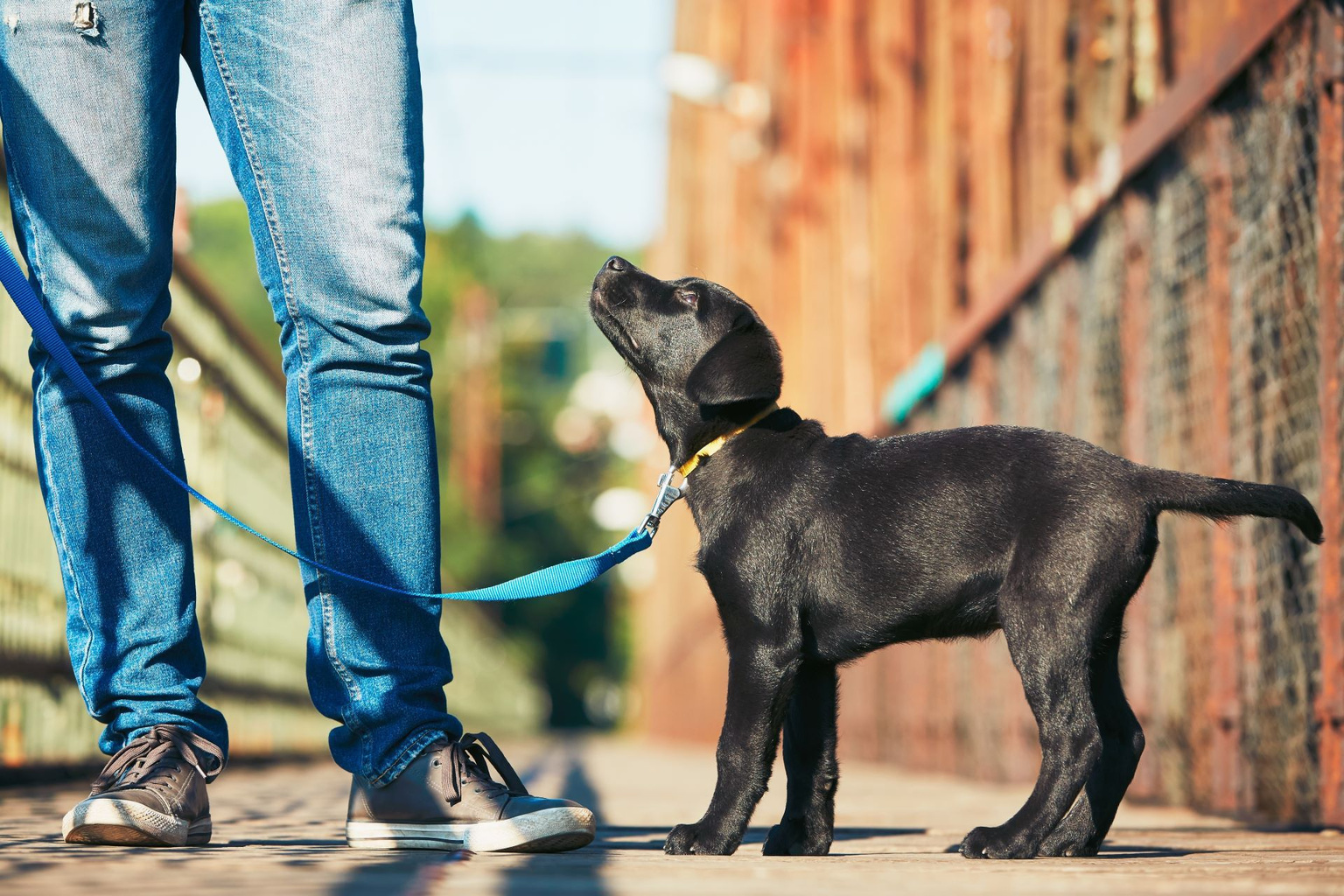
Those early weeks — the moments when your puppy is learning to follow you around the house, settling beside you, or looking up to check in — are the beginning of that partnership.
And helping your puppy figure out the world together can be one of the most rewarding parts of bringing a dog into your life.
If you’d like a little guidance as you and your puppy get started together, feel free to reach out — we’re always happy to help new puppy parents navigate those early weeks with confidence.
