
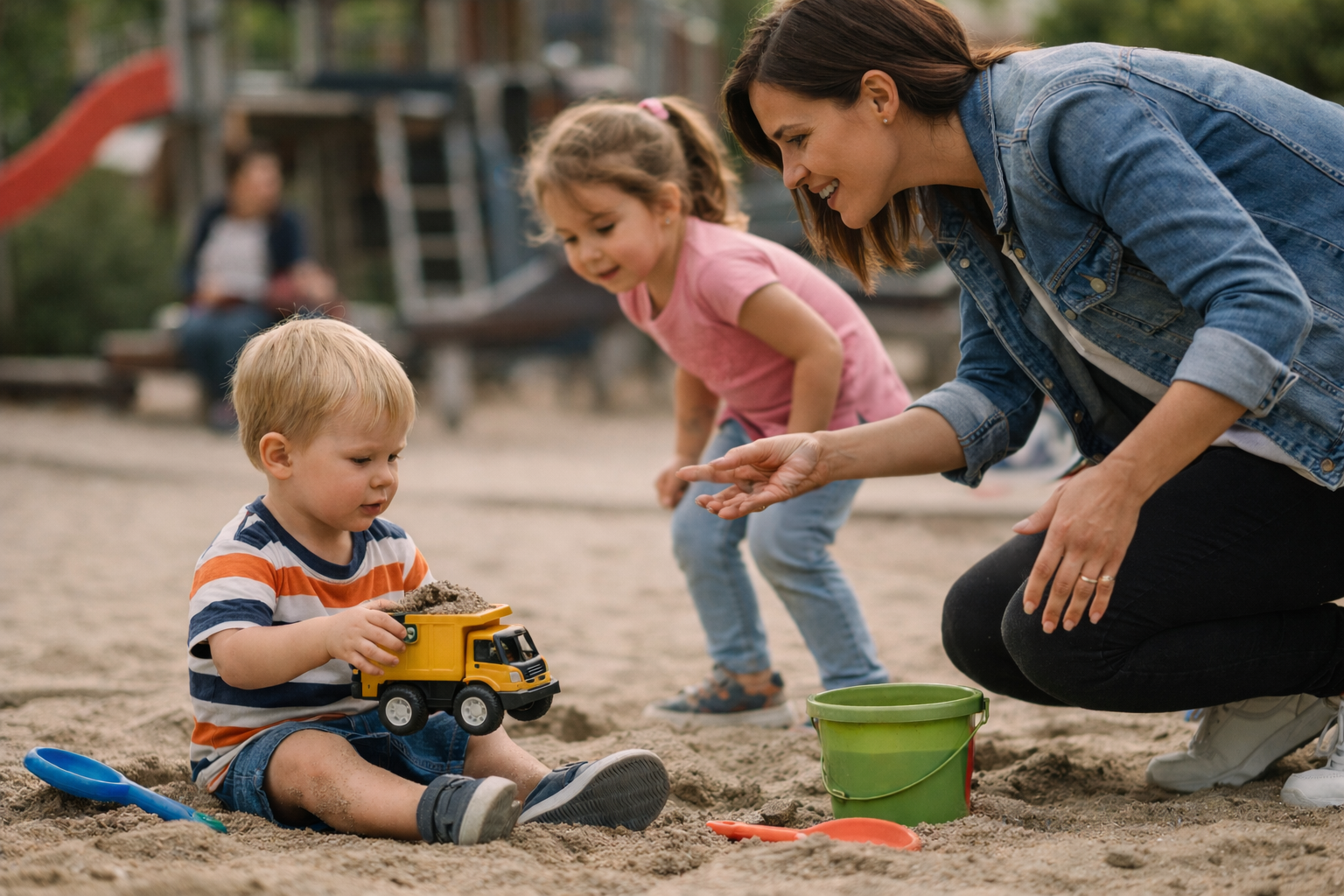
There’s a moment that happens at playgrounds everywhere.
A toddler finds something interesting — a truck, a shovel, a bucket.
They pick it up. They start exploring it. Another child walks over.
And almost immediately, the parent of the toddler steps in:
“I think the other child wants to play too. You should share.”
It happens so quickly that most people barely notice it. But if you watch carefully, something interesting is happening in that moment.
Because the child wasn’t done playing with the toy.
And the parent knows it.
What The Parent Is Really Responding To
When parents say this, they’re rarely responding to their child. They’re responding to the other adult standing nearby, just out of view.
The instruction becomes a kind of social signal:
We’re the kind of family that teaches sharing.
We’re thoughtful.
We’re aware of others.
We’re raising a good citizen.
And to be clear, those are good values. But something subtle often gets lost in the moment.
The child who was happily exploring the toy is suddenly asked to give it up.
Not because they were ready. But because someone else was watching.
The Quiet Pressure Of Parenting In Public
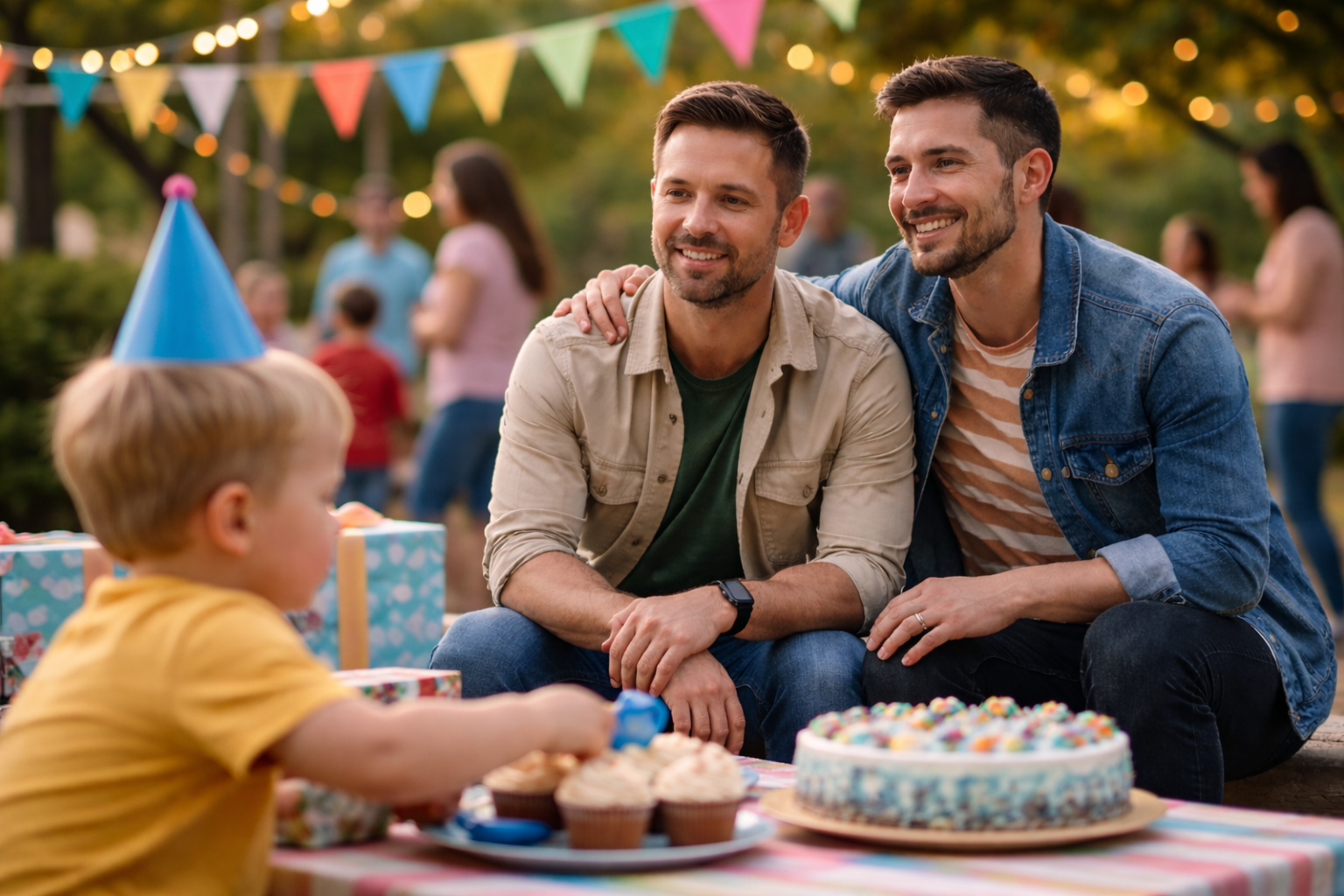
Parents are rarely just parenting their child. They’re parenting in front of other adults.
At playgrounds. At birthday parties. At daycare pickup.
And in those spaces, a quiet pressure appears. And sometimes that pressure leads to small performances — tiny moments where the audience becomes part of the decision.
Even when the child’s experience might suggest something different.
The Dog Version Of This Moment
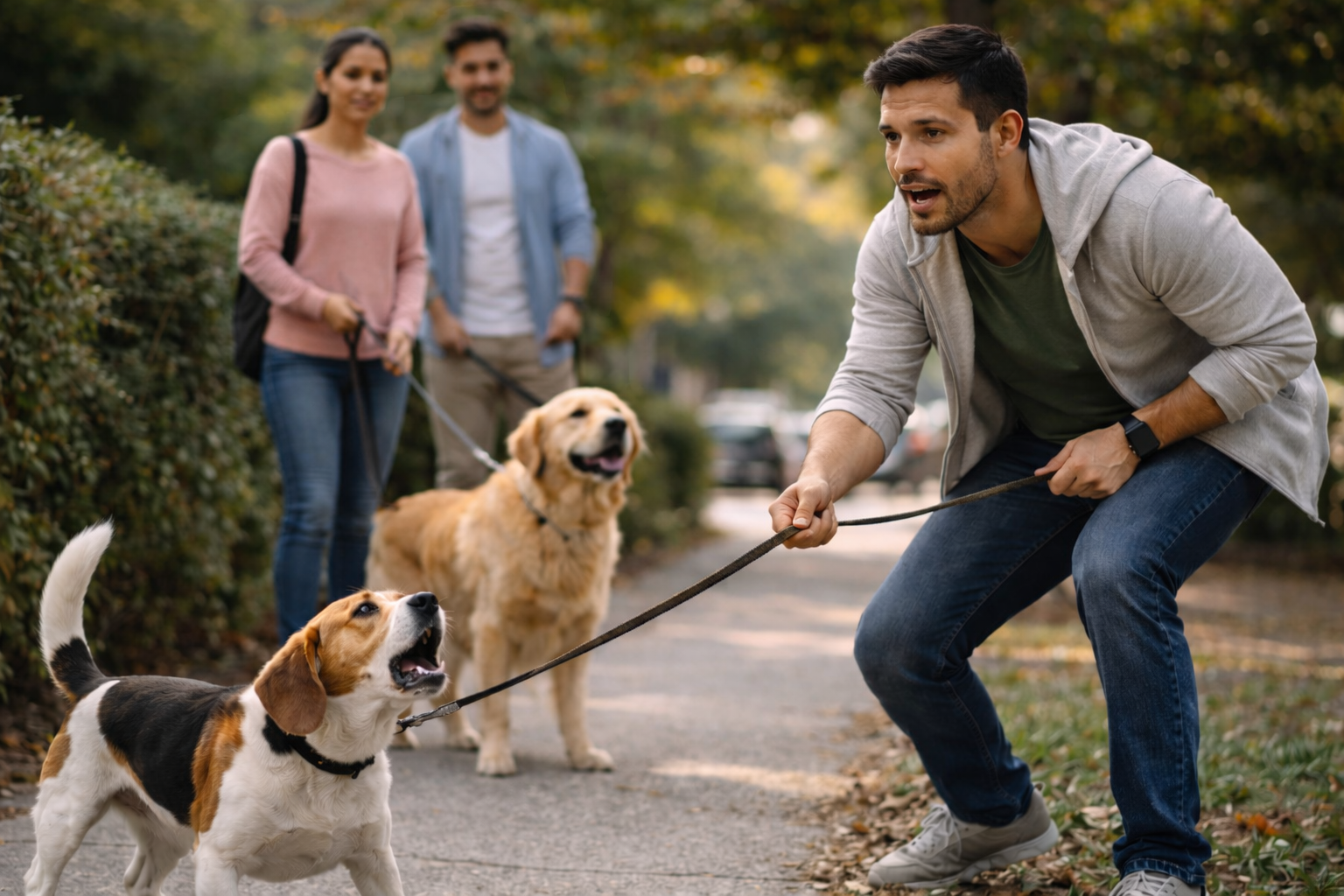
A very similar moment happens on dog walks.
Two dogs see each other from a distance. One dog starts barking. And suddenly the dog parent says — just loud enough for the other person to hear:
“Hey hey hey… barking isn’t NICE!”
The tone often carries a little extra volume. Just enough so the other dog parent knows what’s happening. Just enough to communicate something important:
I’m aware of my dog.
I’m responsible.
I’m not one of those people who lets their dog act like this.
In many ways, it’s the same kind of moment.
A small performance. Not a malicious one. Just a very human one.
And that same instinct often shapes the rest of the walk too.
Many dog parents move through walks with a set of quiet expectations:
Walk here.
Don’t sniff too long.
Don’t stop.
Don’t linger.
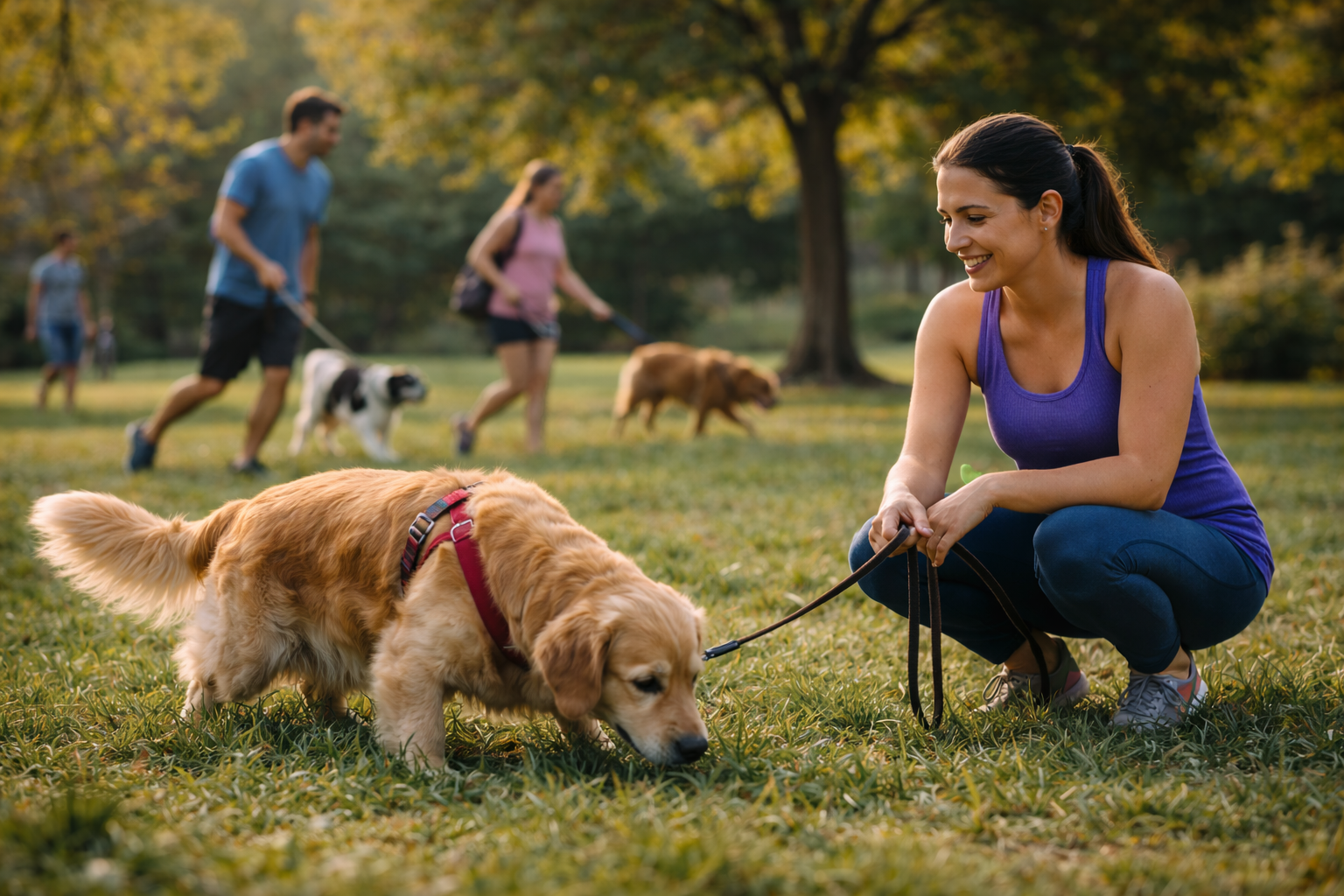
But from the dog’s perspective, many of the most meaningful moments in their day involve exactly those things.
The smells. The sounds. The textures of the environment.
To a dog, a walk isn’t just transportation. It’s exploration.
The Difference Between Structure And Control
Of course, dogs need guidance. Children do too. No one is suggesting chaos.
But sometimes we confuse structure with constant control.
We rush toddlers away from experiences they’re enjoying. We pull dogs away from environments they’re curious about.
Not always because it’s necessary. But because we’ve become accustomed to moving through the world quickly and efficiently.
A Small Question Worth Asking
This isn’t about abandoning values like sharing, patience, or cooperation. Those still matter, of course.
But moments like these invite a simple question:
Are we guiding our children and dogs based on what they need — or based on how our behavior looks to other adults?
Sometimes the difference between those two things is surprisingly small.
A Small Shift In Priority
Instead of this:
Social expectations
Teaching a visible lesson
The child or dog’s experience
The order can become:
The child or dog’s experience
Thoughtful guidance
Social expectations
When that shift happens, something interesting often follows: Children still learn to share. Dogs still learn to cooperate. But neither of them feels like they’re constantly being managed for the benefit of an audience.
They’re simply learning how to move through the world — one moment at a time.
