
Why Your Dog Is Perfect Off-Leash… But A Maniac On-Leash
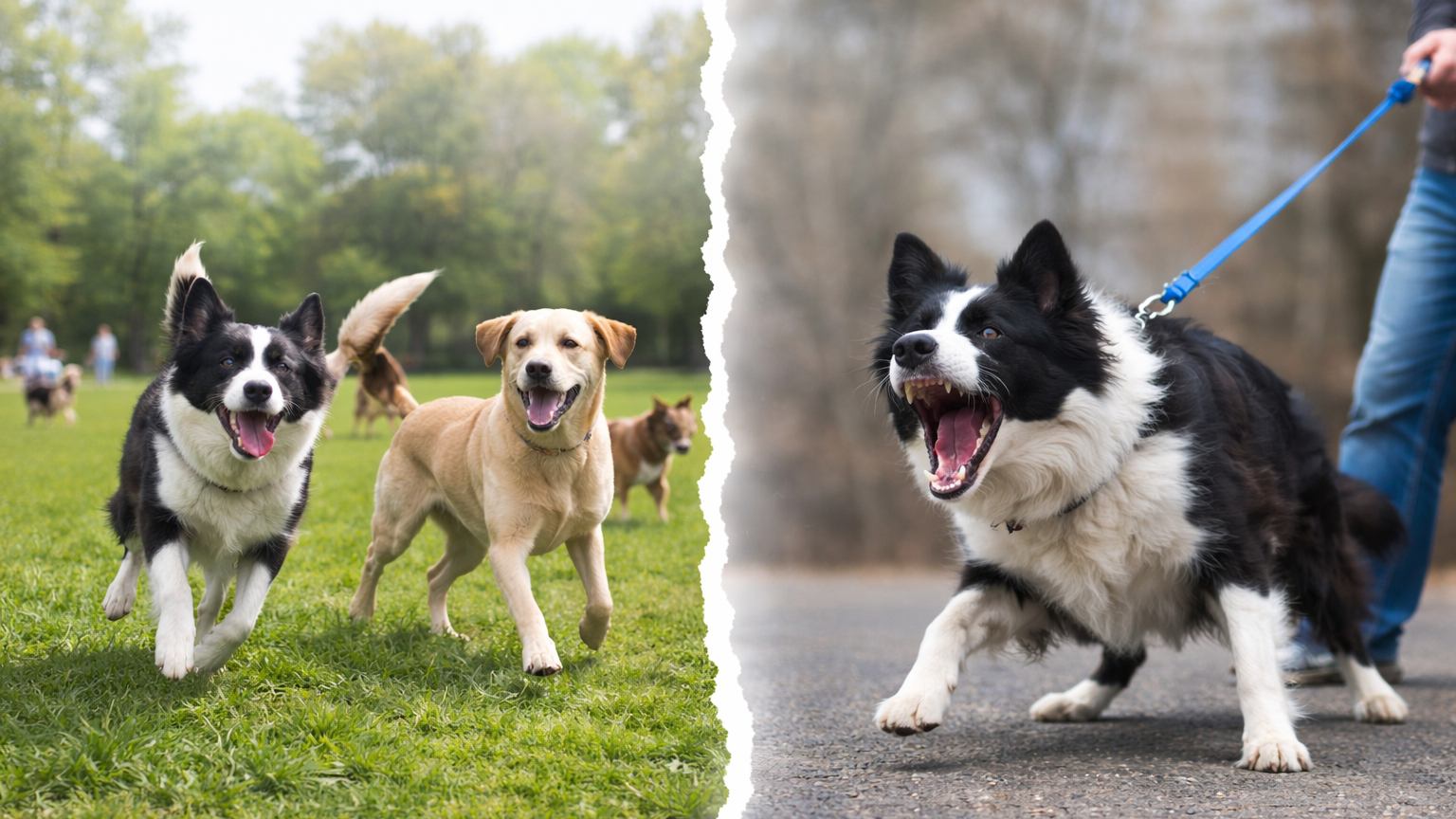
If your dog looks like a social butterfly at the dog park—but turns into a barking, lunging mess the moment a leash goes on…
You’re not alone.
This is one of the most common (and confusing) things we hear from dog parents.
And no—your dog doesn’t have a split personality.
The environment changed. And that changes everything.
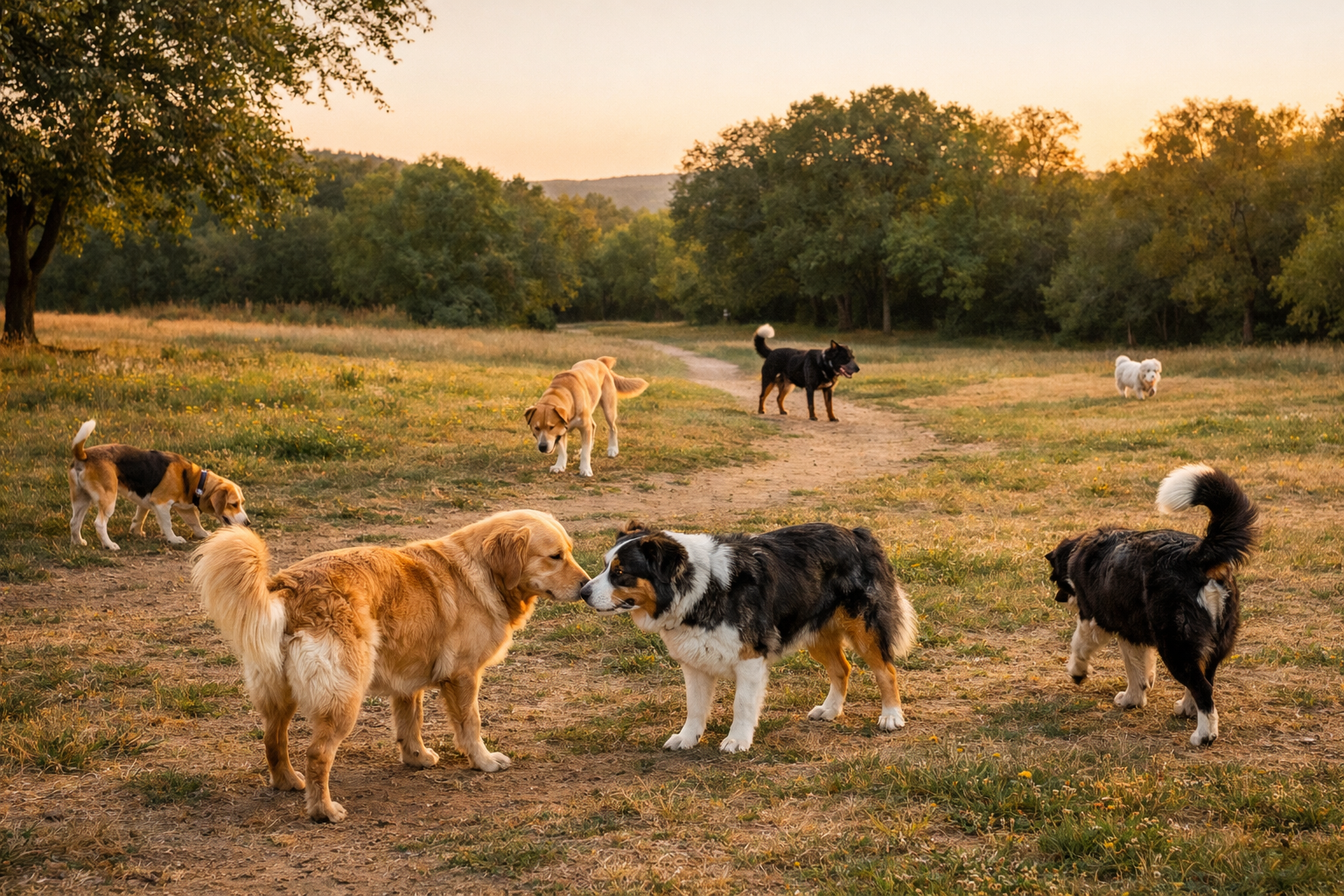
Off-Leash: “I’ve Got This”
When dogs are off-leash, they have options.
They can:
Approach when they’re ready
Move in curves instead of straight lines
Pause, sniff, disengage
Walk away if something feels off
That freedom allows them to be polite.
Even high-energy dogs can look calm here—because nothing is forcing them into an interaction they’re not ready for, or keeping them from an interaction they are ready for.
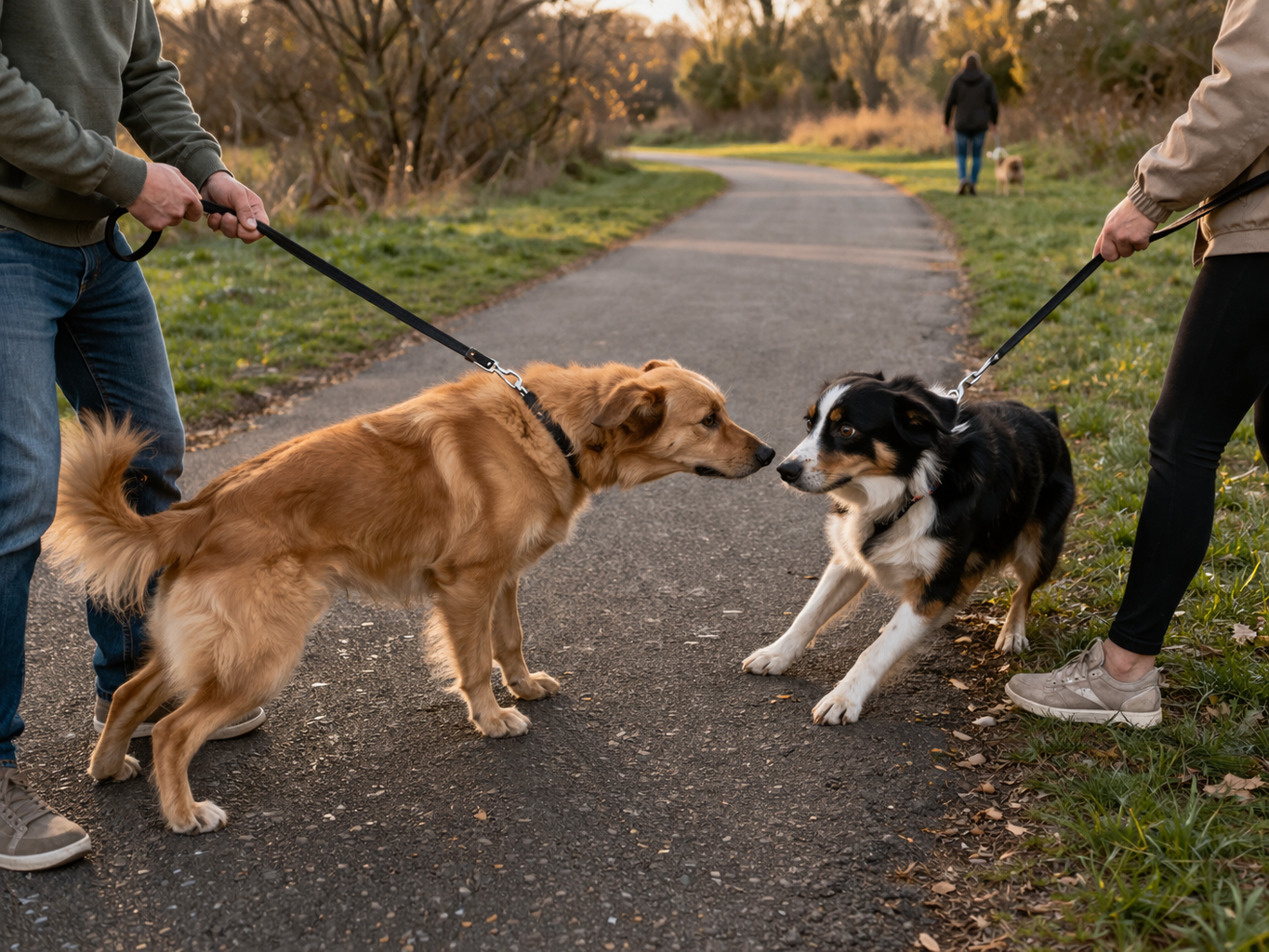
On-Leash: “I Don’t Have A Choice”
Now add a leash.
Even if you’re doing your best to avoid other dogs, your dog still feels:
Restricted movement
Limited ability to create space
A physical connection that prevents them from fully leaving
Because from your dog’s perspective, they can’t fully approach… and they can’t fully get away.
They’re stuck in between.
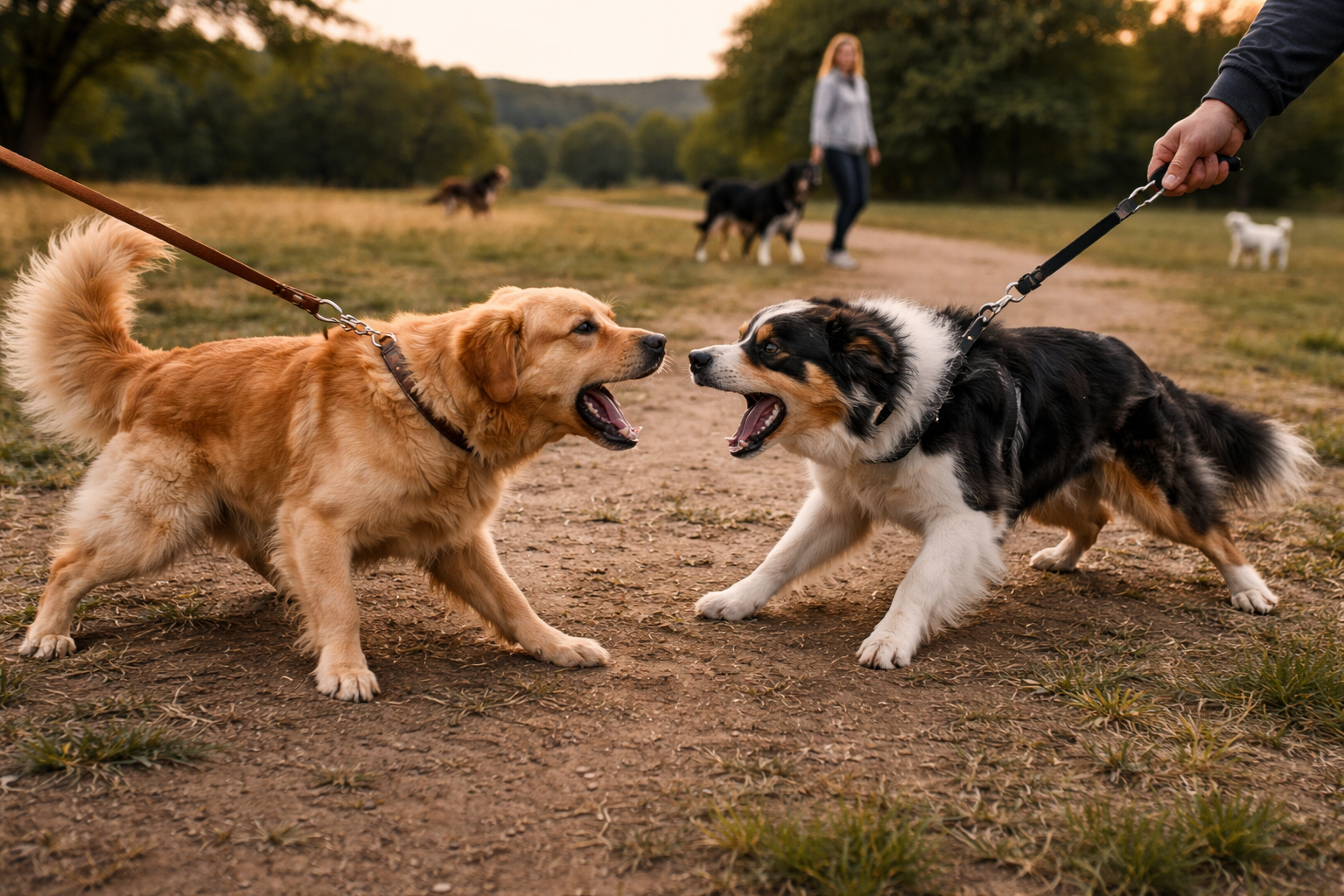
Why It Looks Like Aggression (But Often Isn’t)
This is the part that freaks people out.
Your dog:
Stiffens
Stares
Barks or growls
Lunges
And you’re thinking: “Wait… you love other dogs. Why do you sound like you want to fight them?”
Here’s the truth: Excitement + Frustration + Constraint can look exactly like aggression.
Your dog might be thinking:
“I WANT TO SAY HI—BUT I CAN’T QUITE GET THERE.”
I’M NOT SURE ABOUT THIS—BUT I CAN’T LEAVE EITHER.”
Either way, they:
Can’t approach naturally
Can’t move away cleanly
Can’t control the interaction
So the energy builds… and spills over.
Loud. Fast. Intense.
To another dog and dog parent, that can feel threatening—even if your dog’s intent is social.
“Then, Should I Just Let Them Greet and Get It Over With?”
This is the thought most people have next:
“If my dog just wants to say hi… shouldn’t I let them?”
It sounds logical. But in most cases—it makes things worse.
Because if your dog is:
Barking
Lunging
Pulling
…and then gets to go say hi…
They learn:
“This behavior works.”
So next time? They escalate even faster.
And There’s Another Problem
Even if your dog is “friendly”…
They’re not approaching politely.
They’re coming in:
Fast
Direct
Hot
Which can create bad interactions—or even fights.
The Better Way to Think About It
The goal isn’t to “get the greeting out of the way.”
It’s to help your dog feel stable enough to handle the situation at all.
And if you’re thinking…“Ok…how in the hell do I actually do that?”
The Answer: You stop trying to push your dog into interactions, and you start building the conditions where they can handle them.
Building The Conditions
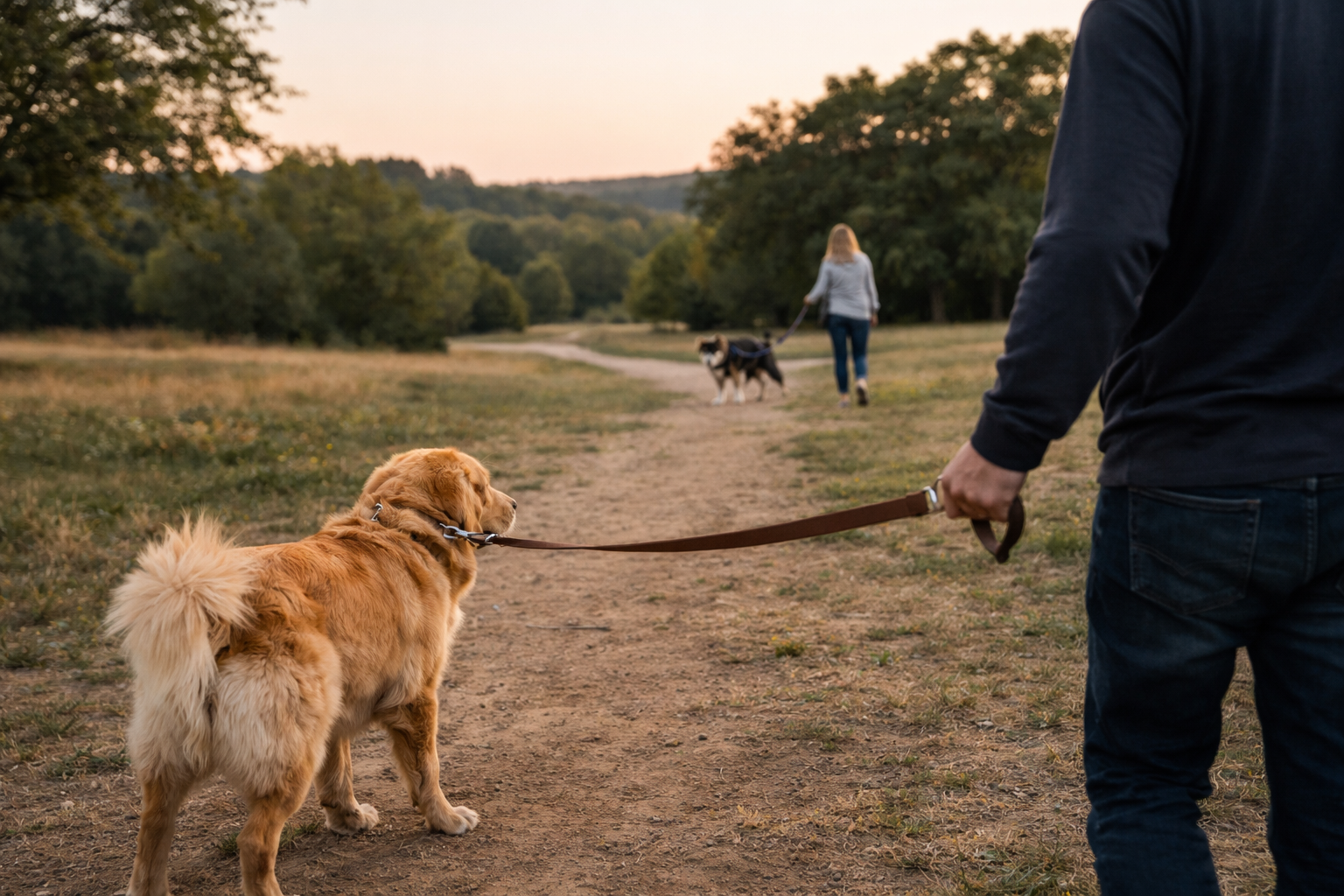
1. Create Distance (Before You Need It)
Most people wait until their dog is already losing it.
Too late.
Distance is not failure—it’s your biggest tool.
If your dog can’t stay calm at 10 feet, try 30. If not 30, try 60.
You’re not avoiding the problem. You’re working at a level your dog can actually succeed.
2. Reward Calm Awareness (Not Just Obedience)
Most people wait for a “sit” or “look.”
But the real gold is this moment: Your dog sees another dog… and doesn’t explode.
That’s where you mark with a “Yes!” (or use a clicker) and reward them with a high-value treat.
By doing so, you’re teaching them, “I like it when you can notice things… without reacting.”
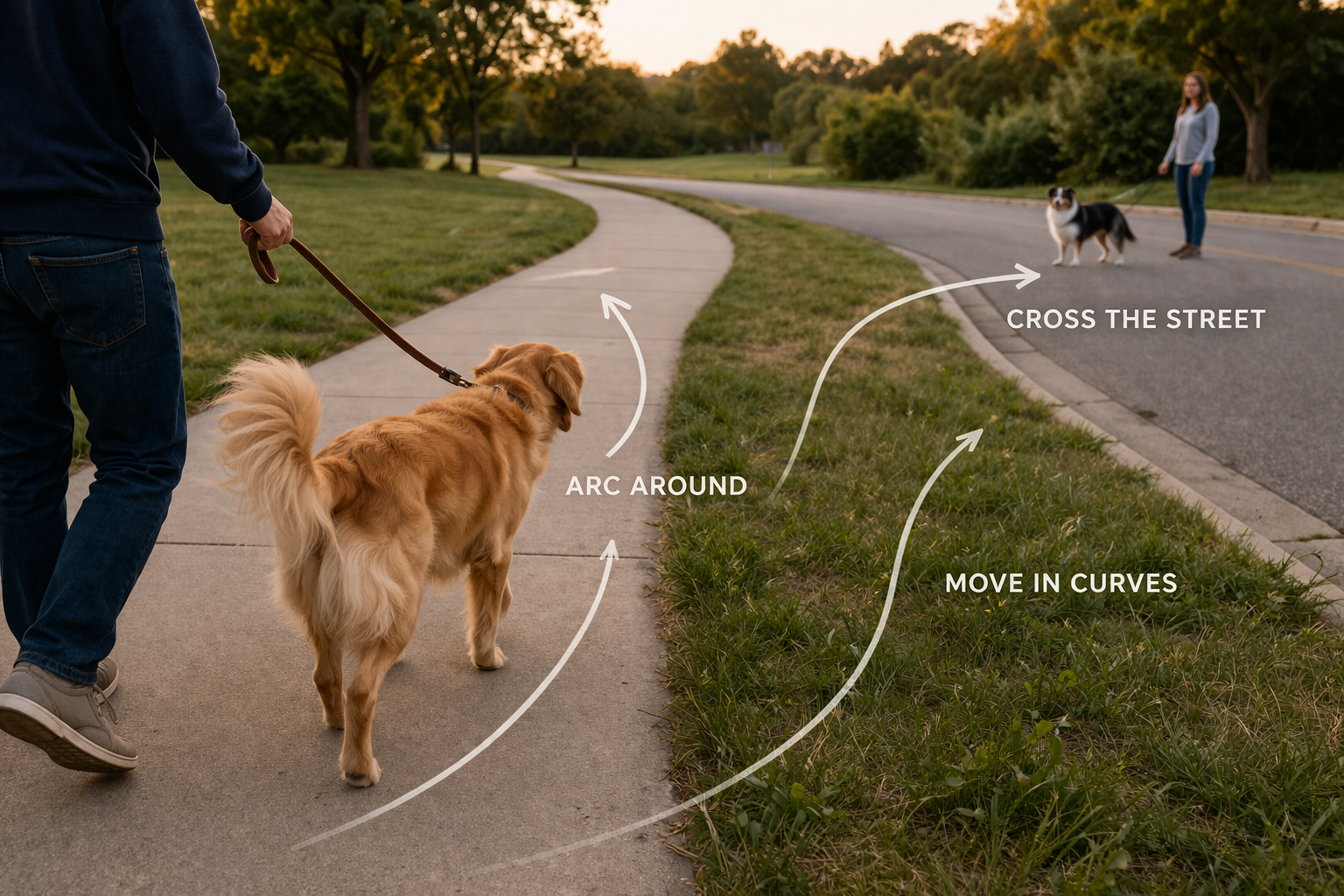
3. Ditch the Straight-Line Approach
Leashes create tension. Tension creates pressure. Pressure creates reactions.
So stop walking your dog directly toward other dogs.
Instead:
Arc around
Cross the street
Move in curves
You’re recreating the natural movement dogs use off-leash.
4. Let Your Dog Disengage
This is where most people mess it up.
Your dog looks away? Sniffs? Hesitates?
And the owner goes:
“Ok good—NOW go say hi!”
No.
That moment was the win.
Disengagement = emotional regulation.
Reward it. Protect it.
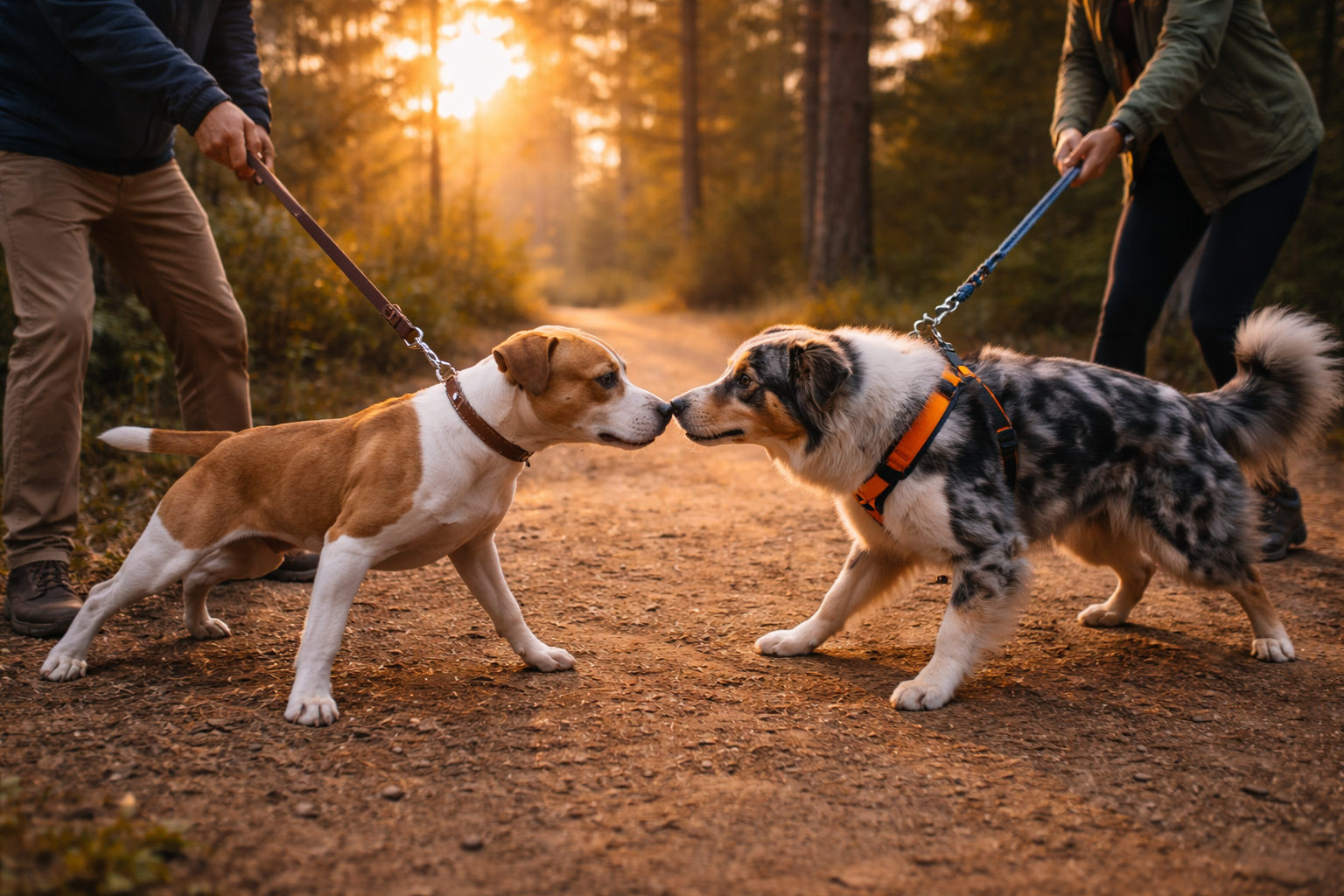
5. Stop Forcing Greetings
This one might sting.
Every time you “just let them say hi to get it over with”, you’re often reinforcing the exact explosion you don’t want.
Because your dog learns:
“If I lose my mind hard enough… I get access.”
That’s not socialization. That’s rehearsal.
What This All Adds Up To
Right now, it might feel like you’re just:
Creating distance
Marking moments
Walking in weird curves
Like… what is this actually doing?
The answer: You’re changing how your dog experiences the situation.
At first, your dog sees another dog and feels:
“I NEED to go over there.”
“This is too much.”
So they explode.
But with this work, something shifts.
Your dog begins to learn:
“I can notice that dog… and stay here.”
“I don’t have to rush in.”
That’s emotional regulation. And like I said earlier, this changes everything.
And over time, you get a different dog:
They see another dog and stay loose
They look… and then look away
They can walk past without needing to engage
You didn’t fix the greeting. You changed the state of mind behind it.
A calm greeting isn’t something you force, it shows up when your dog no longer feels like they have to rush into it.
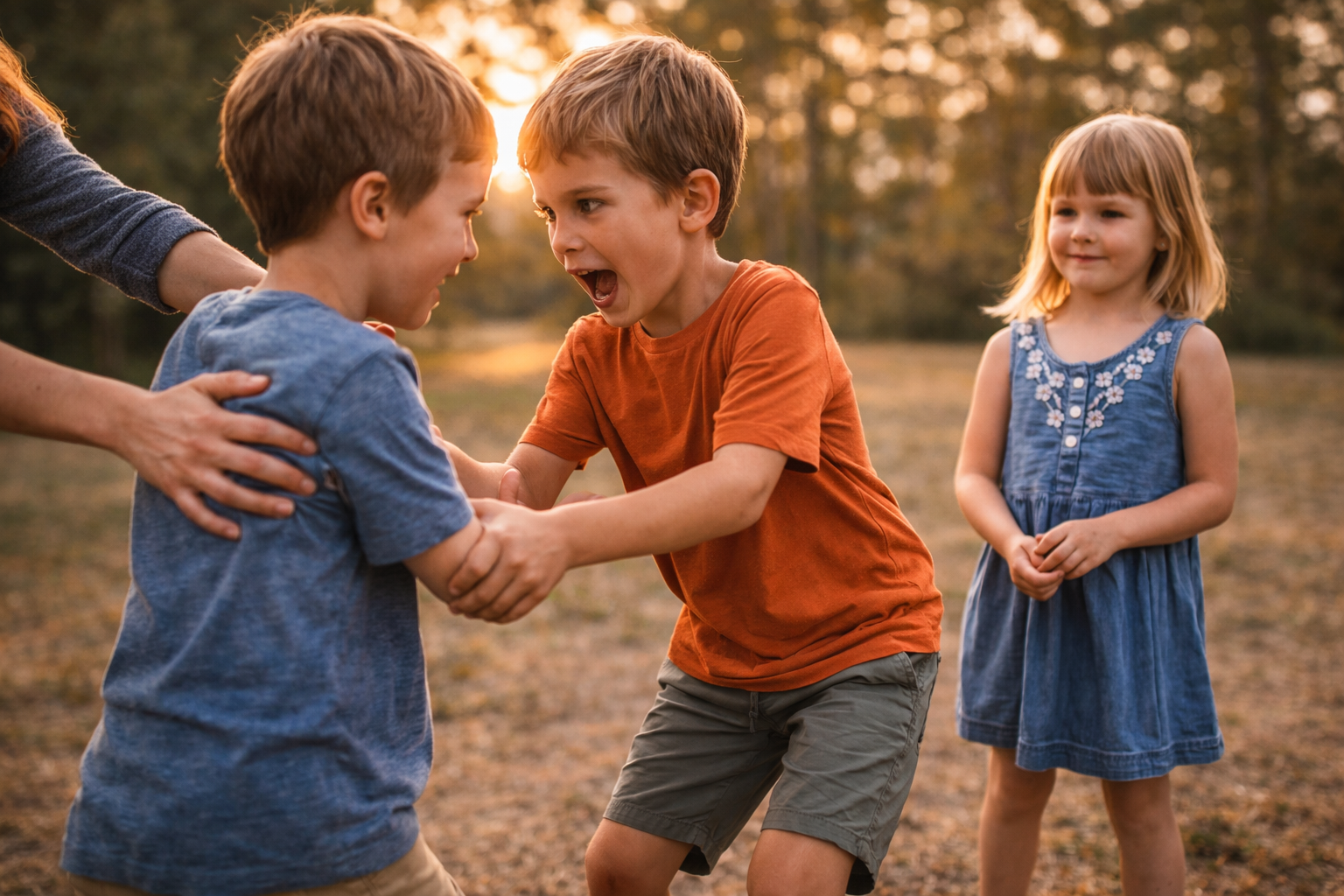
Think About When We Were Kids
When we got excited, we didn’t handle it well.
We rushed in. Grabbed. Pushed. Not aggression—just too much feeling.
And being held back? Absolutely frustrating.
But over time, we learned:
How to pause
How to approach
How to handle it
Not from being forced into greetings, but from someone teaching you what to do with all that energy.
It’s the same with your dog.
You’re not getting it “out of their system.”
You’re teaching them how to handle the feeling in the first place.
